Landlord Insights
Landlords Selling Up: How Agents Spot Them Before They List

November 9, 2026
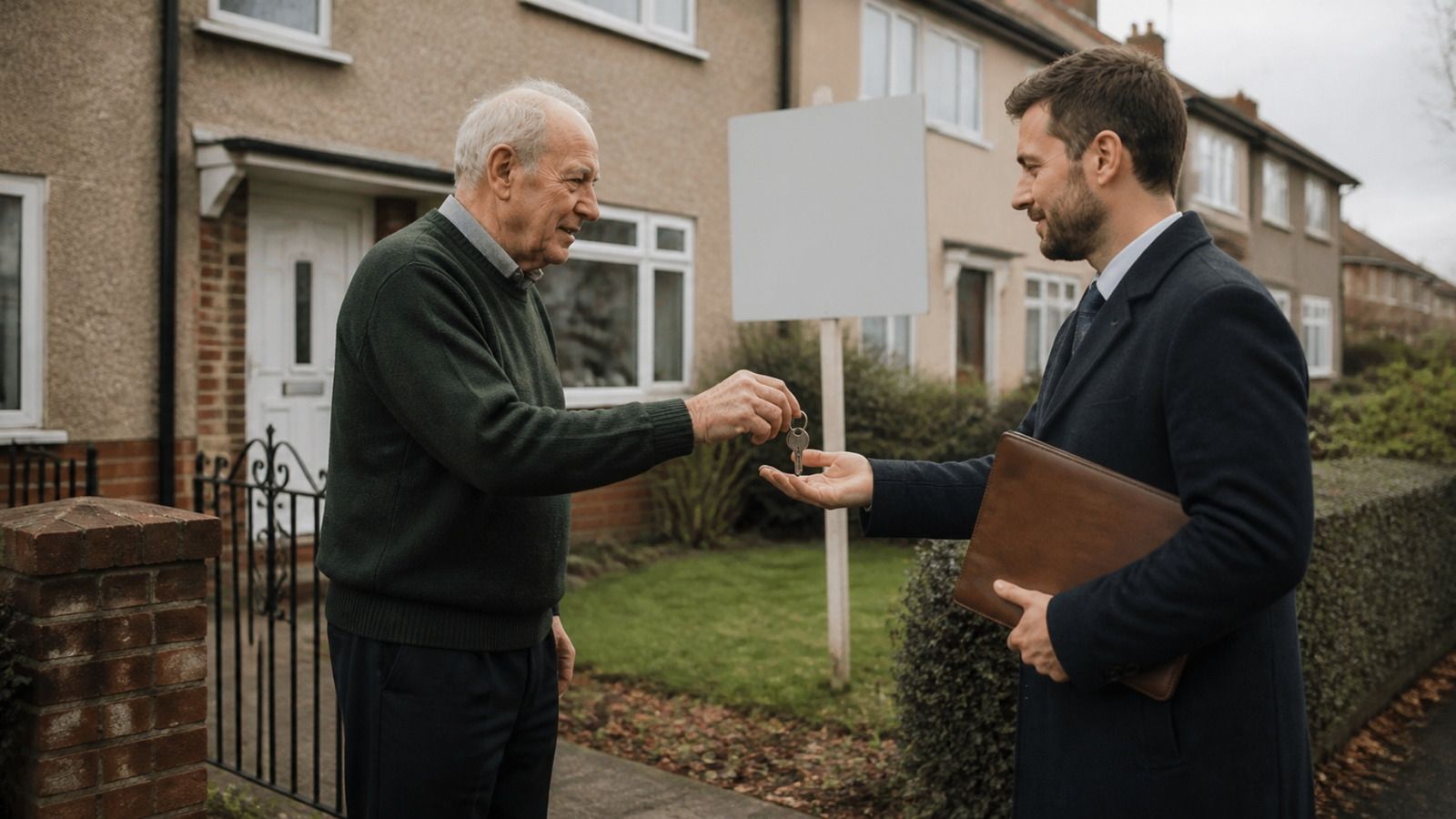
Almost a third of landlords in England plan to shrink their portfolio. In the English Private Landlord Survey 2024, 31% said they planned to decrease the number of homes they let over the next two years, and those landlords held 39% of tenancies. Sixteen per cent planned to sell everything.
Plans are not listings. Hamptons reported in July 2026 that 9.2% of homes listed for sale in June had been advertised to rent in the previous five years, down from 11.3% a year earlier, and that landlords bought more homes than they sold for the first time since 2019. Landlords selling up are moving more slowly, and more carefully, than the headlines of 2024 suggested.
That makes timing the agent's advantage. The landlord who decides to sell often leaves signs in the records before the home reaches the portals. Which signals tell you, and how do you write to that landlord first?
Yes, but fewer of them are doing it in a rush. The intent in the survey data is large, and the sales data shows landlords holding back while the Renters' Rights Act beds in.
| Measure | Figure | Source |
|---|---|---|
| Landlords planning to decrease their portfolio | 31% (39% of tenancies) | English Private Landlord Survey 2024 |
| Landlords planning to sell all their properties | 16% | English Private Landlord Survey 2024 |
| Main reason for planning to decrease | Recent tax and legislative changes (66%) | English Private Landlord Survey 2024 |
| Homes listed for sale in June 2026 that were rented in the previous five years | 9.2% (11.3% a year earlier) | Hamptons, July 2026 |
| Landlord share of purchases, June 2026 | 10.2% | Hamptons, July 2026 |
Two cautions on those numbers. The survey sample is landlords who registered tenancy deposits themselves, so it is not every landlord in England. And a plan to sell within two years is a statement of intent, which the 2026 market is testing.
The rules explain the hesitation. Since 1 May 2026, a landlord who needs the tenant to leave in order to sell must use Ground 1A, give four months' notice, and cannot use it in the first 12 months of a tenancy. A landlord who uses the selling ground cannot market or re-let the home for 12 months afterwards. Hamptons found that 51% of landlord listings in 2025 did not sell, rising to 60% for flats. A landlord who serves notice and then fails to sell now faces a year with no rent.
Our Renters' Rights Act guide sets out the other changes landlords are working through.
"Since May, a landlord who lists without a plan risks a year with no buyer and no tenant. The careful ones talk to an agent first."
Five patterns show up in property records before a sale listing. One on its own is a reason to watch. Two together are a reason to write.
A recent portfolio reduction. A landlord who has sold one home this year has already started reducing. The survey found that 57% of landlords planning to decrease intended to sell everything.
A let property listed for sale. A home with rental history appearing on the sales portals, often with a sitting tenant, tells you the landlord has started. It is also your best evidence about the rest of the portfolio.
A tenancy ending without a re-let. A home that came off the letting market and has not been advertised to rent again may be one where the landlord is waiting for vacant possession.
A poor EPC with an improvement bill. All private tenancies in England are to meet EPC C, under new metrics, by 1 October 2030, with spending capped at £10,000 per property. The government estimates an average spend of £5,400. In the 2024 survey, 14% of landlords had at least one home rated E, F or G.
Licensing pressure. Since 23 December 2024 councils have been able to designate selective licensing schemes without Secretary of State confirmation, after at least ten weeks of consultation. HMO landlords renew mandatory licences at least every five years. A new scheme or a licence renewal is a cost point where some landlords decide to sell.
Watch the EPC signal carefully in conversation. The 2030 standard still needs new legislation and regulations, which the government aims to bring into force in 2027. In a letter, describe it as a confirmed government target that is not yet law.
Because one landlord sale can produce three pieces of business, and they go to different desks.
The sale instruction. A tenanted or vacant sale, priced against an investor or owner-occupier market.
The rest of the portfolio. A landlord selling one home of five still owns four. Some want them managed by someone else while they decide, and some want a phased sale plan.
The buyer. Landlords accounted for 10.2% of purchases in June 2026, according to Hamptons. A tenanted sale to another landlord avoids the Ground 1A notice and the 12-month restriction entirely, because the tenancy continues under the new owner.
Propalt's own data shows how slow a landlord-type sale can be. In Q3 2026, flats in Yorkshire took 101 days from first listing to sold subject to contract, against 72 days for all homes in the region. Nationally, flats took 77 days against 69 for all homes. A landlord selling a flat needs an agent who prices for that market from day one, and a letting agent who can offer the home to a landlord buyer with the tenant in place.
The ones showing two signals and owning more than one home. A single-property landlord selling up is one instruction. A portfolio landlord is a pipeline.
Start with landlords who have a let property already listed for sale, then those who sold in the last 12 months and still own other homes. HMO landlords in an area where the council has just consulted on licensing come next, followed by owners of E, F and G rated homes.
On 26 October 2026, Propalt's sales records showed 26 company-owned homes advertised for sale on Rightmove and Zoopla in LS6 (Headingley, Leeds), each property counted once. Company owners are easy to trace through HM Land Registry's corporate ownership data, though some will be developers rather than landlords. Each of those companies can then be checked for other homes it still owns.
Our guide on checking whether a property is owned by a limited company explains that search and where it can mislead.
It should refer to what you can see, offer a choice, and leave the decision with the landlord. Here is a script you can adapt. For layout and length, see How to Write a Letter.
Dear [Name],
I noticed [property address] has come to the market for sale. I work with landlords across [outcode] and wanted to set out the three routes owners in your position are taking this year.
Sell with the tenant in place. [If true: We have landlord buyers registered who are looking for let homes in [area].] Your tenancy continues, so there is no notice period and no 12-month restriction on re-letting if the sale takes longer than planned.
Sell with vacant possession. If you want an owner-occupier buyer, the Ground 1A notice needs four months and the timing matters. We can help you plan it.
Keep some homes and hand over management. If you are selling to reduce your workload, we can take on the homes you keep, including help with registering on the new landlord database.
I can send you a free appraisal for [property] and a note on the other homes you own nearby. Call me on [number] or reply to this letter.
[Name], [Agency]
Send it by post under legitimate interests, with a privacy notice and an opt-out, and stop if the landlord asks. Phone and email follow-ups to individual landlords fall under PECR. The data sources and contact rules are covered in our Landlord Database UK guide.
Propalt flags the signals in one place. My Prospects lists the landlords in your area with portfolio value, rental roll and an Active Seller status, and its Properties for Sale view shows which of their homes are on the market now. Audience Builder has an Actively Selling Landlords audience for letter campaigns, alongside HMO Landlords and Inefficient Homes audiences for the licensing and EPC signals. For the wider landlord prospecting method, see How to Find New Landlords.
📌 KEY TAKEAWAY
Landlords selling up are slower and more cautious in 2026, which gives agents more time between the decision and the listing. Watch for portfolio reductions, let homes listed for sale, tenancies ending without a re-let, poor EPCs and licensing costs, and write when two of them line up. Offer the tenanted sale, the vacant sale and management of what the landlord keeps. Propalt shows you which landlords in your patch are already selling, so your letter arrives before their listing does.
SOURCES & DATA REFERENCES
Ministry of Housing, Communities and Local Government (5 December 2024). 'English Private Landlord Survey 2024: main report.' 31% planning to decrease (39% of tenancies), 16% to sell all, 57% of decreasers to sell all, 66% citing tax and legislative changes, 14% with an E to G home; sample is direct landlords. gov.uk/government/statistics/english-private-landlord-survey-2024-main-report
Hamptons (July 2026). 'Landlord sales slow following the Renters' Rights Act.' 9.2% of June 2026 sale listings previously rented (11.3% a year earlier); landlords 10.2% of purchases; 51% of 2025 landlord listings unsold, 60% for flats. hamptons.co.uk/articles/landlord-sales-slow-following-the-renters-rights-act
Ministry of Housing, Communities and Local Government. 'Grounds for possession: guidance for landlords and letting agents.' Ground 1A four months' notice; not in the first 12 months of a tenancy. gov.uk/government/publications/grounds-for-possession-guidance-for-landlords-and-letting-agents
GOV.UK (archived guide, updated 6 November 2025). 'Guide to the Renters' Rights Act.' No marketing or re-letting for 12 months after using the moving or selling grounds. gov.uk/government/publications/guide-to-the-renters-rights-act
Department for Energy Security and Net Zero (January 2026). 'Improving the energy performance of privately rented homes: government response.' EPC C by 1 October 2030; £10,000 cap; £5,400 average; regulations aimed for 2027. gov.uk/government/consultations/improving-the-energy-performance-of-privately-rented-homes-2025-update
Ministry of Housing, Communities and Local Government (December 2024). 'Selective licensing in the private rented sector: a guide for local authorities.' No Secretary of State confirmation from 23 December 2024; at least ten weeks' consultation. gov.uk/government/publications/selective-licensing-in-the-private-rented-sector-a-guide-for-local-authorities
GOV.UK. 'House in multiple occupation licence.' Mandatory licence for 5+ people forming more than one household; licence valid for a maximum of five years. gov.uk/house-in-multiple-occupation-licence
HM Land Registry. 'UK companies that own property in England and Wales (CCOD).' Excludes private individuals. use-land-property-data.service.gov.uk/datasets/ccod
Propalt (October 2026). Quarterly market, Q3 2026: Yorkshire days from first listing to SSTC, flats 101, all homes 72; national, flats 77, all homes 69. Rightmove listing data.
Propalt (October 2026). Company-owned homes advertised for sale on Rightmove and Zoopla in LS6 (deduplicated by property), 26 October 2026: 26.
Information Commissioner's Office. 'Sending direct marketing: choosing your lawful basis.' Post not covered by PECR; legitimate interests as a likely basis. ico.org.uk/for-organisations/direct-marketing-and-privacy-and-electronic-communications

England's landlord register opens in the West Midlands on 15 December 2026. See every region's deadline, the £65 fee and what letting agents should do now.
Selective licensing explained for letting agents: how it differs from HMO licensing, the 2024 approval change, council fees and penalties up to £40,000.

There is no public UK landlord database to market to. Where landlord data comes from, how to find portfolio landlords and contact them lawfully.