Landlord Insights
Selective Licensing in 2026: Which Councils Require a Landlord Licence?

November 9, 2026
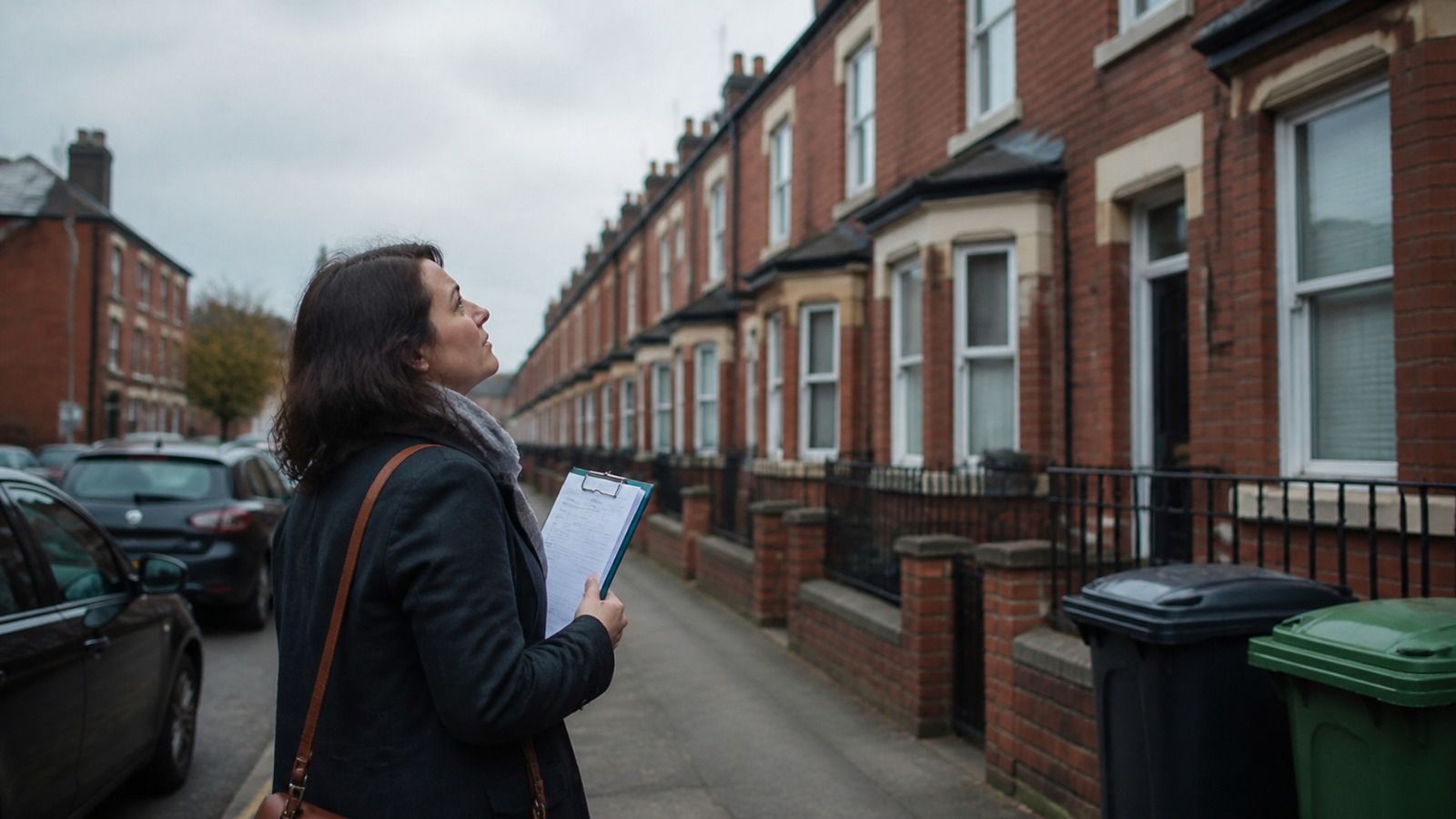
Since 23 December 2024, councils in England have been able to introduce selective licensing schemes of any size without asking the Secretary of State first. Before that date, any scheme covering more than 20% of a council's area or its private rented stock needed central government sign-off.
The effect is visible in 2026. Rotherham started six new designations in February. Croydon started a scheme covering 14 of its 28 wards on 25 September, after moving the start from 1 September. Greenwich, Preston and Burnley all ran consultations on new or renewed schemes that closed in October 2026.
For a letting agent, the question is practical: which properties on your book, or in your patch, need a licence, what does it cost the landlord, and what happens if they ignore it?
Selective licensing covers ordinary rented homes, such as a house let to a family or a flat let to a couple, inside an area the council has designated. It sits under Part 3 of the Housing Act 2004. There are three types of landlord licensing in England:
| Licence type | What it covers | Where it applies | Who decides |
|---|---|---|---|
| Mandatory HMO | HMOs with 5 or more people from 2 or more households | Everywhere in England | Set nationally since 1 October 2018 |
| Additional HMO | Smaller HMOs outside the mandatory definition, such as 3 or 4 person shares and some section 257 converted blocks | Areas the council designates | Council, under Part 2 of the Housing Act 2004 |
| Selective | Privately rented homes that are not licensable HMOs | Areas the council designates | Council, under Part 3 of the Housing Act 2004 |
A property only needs one licence. Croydon's guidance, for example, says a property already licensed as a mandatory or additional HMO does not also need a selective licence.
Under the GOV.UK guide for local authorities, a council can designate an area for selective licensing on grounds including low housing demand, significant and persistent anti-social behaviour, poor housing conditions, high migration, high deprivation or high crime. For the last four grounds, the area must also have a high proportion of private rented homes. Designations last up to five years, and councils must consult for at least ten weeks.
Poor housing conditions are also the subject of separate new rules on hazards. Our guide to Awaab's Law and private landlords covers what they ask of the same homes.
On 16 December 2024, housing minister Matthew Pennycook wrote to councils confirming a new General Approval. From 23 December 2024, councils no longer need Secretary of State confirmation before implementing a selective licensing scheme of any size. They still have to meet the statutory tests in Part 3 of the Housing Act 2004, and the government asks them to submit scheme data, including fees charged and running costs.
You may see this described as a 2025 change. The General Approval took effect on 23 December 2024, so any scheme designated during 2025 or 2026 was made under the new rules.
Since December 2024, the size of a selective licensing scheme has been a local decision. Borough-wide and multi-ward proposals are now a local call.
Fees are set locally and usually split in two: one payment to apply, a second when the licence is granted. Examples from council pages and consultations in 2026:
Rotherham. Six designated areas, in force from 15 February 2026 to 14 February 2031. The standard fee is £975 per property (£276 on application plus £699 on grant). Late applications, made more than 90 days after a property becomes licensable, pay £1,325.
Croydon. Selective licensing in 14 wards from 25 September 2026 for five years, plus a borough-wide additional HMO scheme. The selective licence fee is £800 (Part A £480, Part B £320), with discounts for accredited landlords, members of ARLA, RICS or Safeagent, and EPC B or above.
Greenwich (proposed). Selective licensing across 18 wards at £974 per property for five years. Consultation closed on 12 October 2026.
Preston (proposed). A five-year licence at £1,050, paid as £470 and £580. Consultation closed on 11 October 2026.
Burnley (proposed). £774 for a first property and £692 for each further property. Consultation closed on 18 October 2026.
As of October 2026, the three proposed schemes had not been confirmed. Check each council's page for its decision.
Notice the late-application penalty in Rotherham and the discounts for agent body membership in Croydon. Both reward landlords who apply on time through a professional agent.
Letting a licensable property without a licence is a criminal offence under the Housing Act 2004. Councils can prosecute or, instead, issue a civil penalty. Since 1 May 2026, the Renters' Rights Act has raised the maximum civil penalty for licensing offences from £30,000 to £40,000. Some council pages, including Rotherham's, still quote the older £30,000 figure.
Rent repayment orders now reach further too. The GOV.UK Guide to the Renters' Rights Act doubles the maximum repayable period from 12 to 24 months, extends the window to apply to 24 months, and requires repeat offenders to repay the maximum. A landlord with a £1,000 a month let who goes two years without a licence could face a £24,000 repayment order on top of any penalty.
Licence details also feed the new landlord register. The PRS Database asks for any HMO, additional or selective licence for each let property, so an unlicensed let will show up as a gap. See our guide to the Landlord Register (PRS Database).
There is no single national map. You check council by council:
Search the council website for "property licensing" or "selective licensing". Most licensing councils publish a postcode or address checker.
Read the designation notice. It names the wards or streets covered and the start and end dates. Rotherham's, for example, lists six areas and runs to 14 February 2031.
Check for consultations. A scheme in consultation now may be live within a year. Councils publish these on their own sites, and trade bodies such as Propertymark report on them.
Check for additional HMO schemes separately. A borough can run both, as Croydon does.
Diary the end date. Schemes last up to five years. A council may renew, extend or let a scheme lapse.
Do this for every outcode your branches cover, then match the result against your managed and let-only stock.
In Propalt, Location Analysis maps every property in your patch, including landlord-owned homes and HMOs. That makes it quicker to pick out the landlord-owned homes on the streets a designation names.
Because a new designation turns every self-managing landlord in that area into someone with a deadline, a four-figure fee, a set of licence conditions and a council that now knows the property exists.
Some will apply on time and manage the conditions themselves. Others will not want to. Every licence carries the mandatory conditions in Schedule 4 of the Housing Act 2004, which include annual gas safety certificates, safe electrical installations, smoke and carbon monoxide alarms and a written statement of occupancy terms, all supplied to the council on demand. Councils can add their own conditions on top. That is a managing agent's day job. A landlord facing a £975 fee in Rotherham, with the late rate of £1,325 looming, has a clear reason to read a letter that offers to handle the application and the conditions.
The numbers in a single outcode are large. On 26 October 2026, Propalt's letting data showed 305 homes listed to rent on Rightmove and Zoopla in Croydon's CR0 outcode, each property counted once, 235 of them owned by private individuals. CR0 is a large outcode and may not sit wholly inside the 14 designated wards, so check each address with the council's checker before you write.
A licensing designation gives you a list of streets, a date and a fee. That is a better reason to write to a landlord than any general offer of management.
Timing matters. Write when the consultation closes, again when the designation is confirmed, and again before the scheme goes live. Agents in Greenwich, Preston and Burnley have that window now.
The rule of seven explains why one letter rarely lands on its own, and how to write a letter that gets read covers the wording.
For building the landlord list itself, see our guide to finding landlords. For the wider compliance timeline, see The Renters' Rights Act 2025: Every Date Letting Agents Need.
📌 KEY TAKEAWAY
Councils have been able to designate selective licensing schemes of any size without Secretary of State approval since 23 December 2024. Fees in 2026 run from about £700 to over £1,000 per property, and letting without a licence now risks a civil penalty of up to £40,000 and up to 24 months' rent repaid. Check each council's designation and consultation pages, then contact landlords in the affected streets before the scheme starts. The Landlords and HMO Landlords audiences in Audience Builder show who owns what in those streets.
Ministry of Housing, Communities and Local Government (16 December 2024). 'Selective licensing in the private rented sector: a guide for local authorities.' Designation grounds, five-year maximum, ten-week consultation, no Secretary of State confirmation from 23 December 2024. gov.uk/government/publications/selective-licensing-in-the-private-rented-sector-a-guide-for-local-authorities
Home Safe Scheme (17 December 2024). 'Government abolishes prior approval requirement for selective licensing schemes larger than 20%.' Minister's letter of 16 December 2024 and the 20% threshold. home-safe.org.uk/news/2024/
Ministry of Housing, Communities and Local Government (2018, archived guidance). 'Houses in multiple occupation and residential property licensing reform: guidance for local housing authorities.' Mandatory HMO definition from 1 October 2018, additional and selective licensing. assets.publishing.service.gov.uk/media/5f7f254ad3bf7f01936c0bb3/
Rotherham Metropolitan Borough Council (2026). 'Selective Licensing 2026 to 2031.' Designation made 14 November 2025, in force 15 February 2026 to 14 February 2031, six areas, £975 standard and £1,325 late fees. rotherham.gov.uk/private-housing/selective-licensing-2026-2031
London Borough of Croydon (2026). 'Selective Licensing Scheme 2026' and 'Licence fees and discounts'; Croydon Newsroom (2026), 'Croydon introduces new private sector property licensing schemes.' 14 wards, five years, £800 fee and discounts; Property118 (2 September 2026), 'Croydon's landlord licensing delay creates legal uncertainty', start moved from 1 September to 25 September 2026 (property118.com/croydons-landlord-licensing-delay-creates-legal-uncertainty/). croydon.gov.uk/housing/landlords-and-managing-agents/property-licensing-schemes/
Propertymark (13 August 2026). 'Licensing expands as penalties increase under Renters' Rights Act.' £40,000 maximum civil penalty from 1 May 2026; Greenwich, Preston and Burnley proposals and fees. propertymark.co.uk/resource/
Ministry of Housing, Communities and Local Government (first published 6 November 2025). 'Guide to the Renters' Rights Act.' Rent repayment orders extended to 24 months. gov.uk/government/publications/guide-to-the-renters-rights-act
Housing Hub, GOV.UK campaign site (updated 10 September 2026). 'Get ready: Register your rental property service.' Licence information required on the PRS Database. housinghub.campaign.gov.uk/renting-is-changing/get-ready-to-register/
Stockton-on-Tees Borough Council (accessed October 2026). 'Mandatory Licence Conditions.' Schedule 4 Housing Act 2004 conditions: gas, electrical, alarms, written statement of terms. stockton.gov.uk/article/15442/Mandatory-Licence-Conditions
Propalt (October 2026). Letting market activity, CR0 outcode (Croydon), properties listed to rent on 26 October 2026: 305 in total, 235 with a private individual proprietor. Rightmove and Zoopla listings only, deduplicated by property. Propalt platform data.

There is no public UK landlord database to market to. Where landlord data comes from, how to find portfolio landlords and contact them lawfully.

How to win landlords from other agents in 2026: why landlords switch, how to spot homes let elsewhere, when to write, and the rules on approaching them.

Small landlord companies took 57% of property charges at Companies House in early 2026. Which buy-to-let mortgage lenders grew, what it means for agents.