How to Find New Landlords: 4 Methods for Letting Agents

October 19, 2026

More than half of private landlords in England manage their lettings themselves. The English Private Landlord Survey 2024 found that 52% use no letting agent at all, while 43% use an agent to find tenants and only 18% pay for management. Across England's 4.7 million privately rented households, that is the largest pool of potential instructions a letting agent has, and none of it appears on a portal.
The difficulty is that landlords do not identify themselves. You have to work out which homes are let, who owns them and what would make them talk to you. This guide sets out four methods that do that, in the order most agencies find them useful.
The question it answers: how do you find new landlords in your area, and approach them in a way that wins the management?
By starting from the property, not the person. A let home leaves signals (tenure, listing history, licensing, energy certificates), and those signals point to an owner you can write to. The four methods below each start from a different signal.
| Method | Starts from | Best for | What you send |
|---|---|---|---|
| 1. Target landlord-owned homes | Ownership and tenure data | New landlords in your patch | Referral or service letter |
| 2. Map portfolio landlords | Properties grouped by owner | High-value instructions | Personal approach, then LinkedIn |
| 3. Re-engage past contacts | Your own CRM | Landlords who know you | Timely, specific update |
| 4. Promote recent lets | Your completed lets | Owners of similar homes nearby | 20:20 style letter |
Filter for homes where the owner is not the occupier, then write to the owner. A tool such as Audience Builder does this filtering for you. Three campaigns work well from that list.
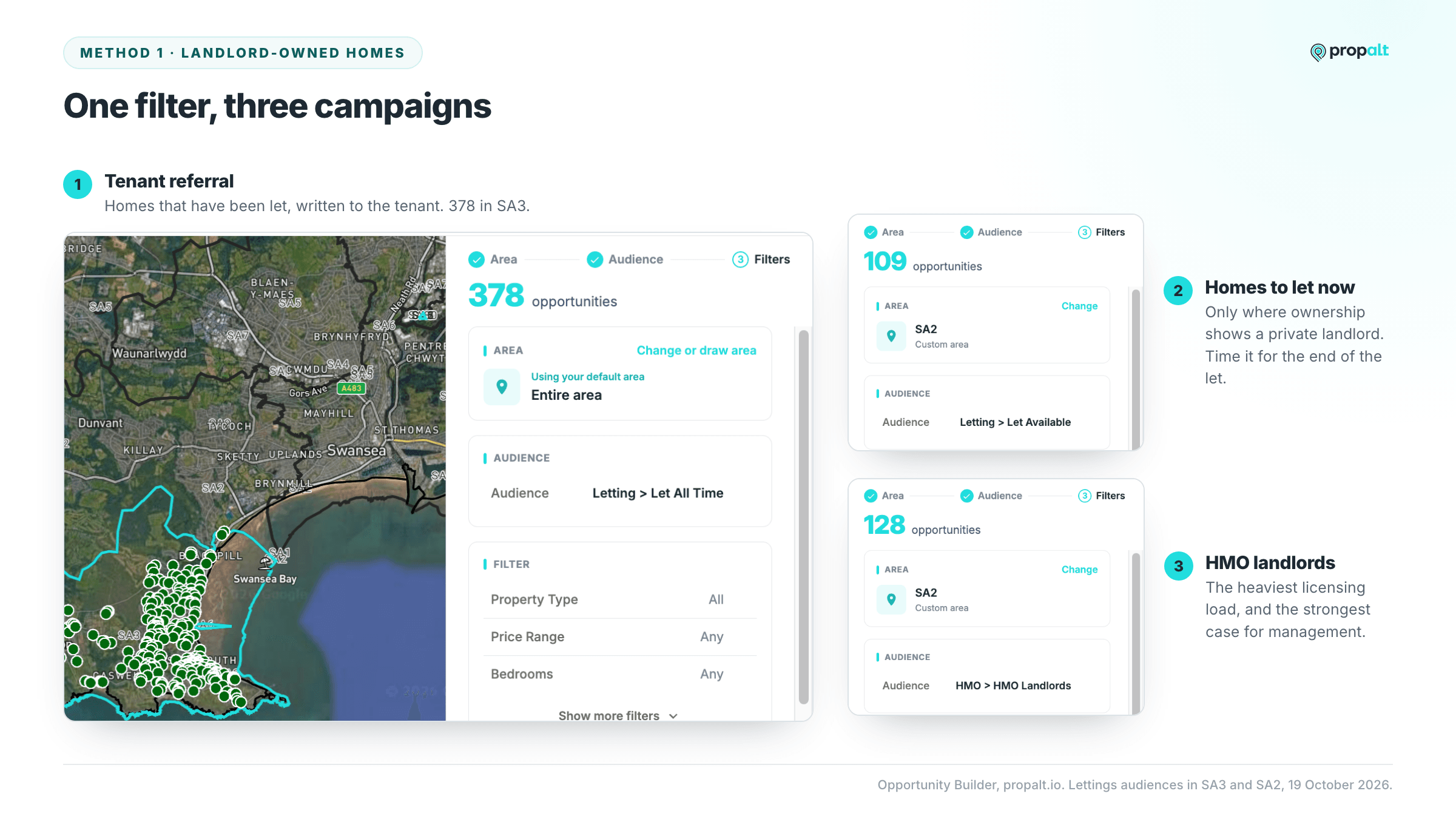
The landlord referral campaign. Write to tenants, not landlords, and offer a small thank-you if their landlord gets in touch. Tenants know whether their landlord is stretched, and a recommendation from a tenant carries weight. Do not ask tenants for their landlord's name or contact details. Under UK GDPR you have no basis to collect that data from a third party, and a referral should come from the landlord contacting you.
Should you write to properties currently to let? Only if it has worked for you before, and only where the ownership data shows a private landlord. A home on the market with another agent is already instructed. The landlord is more open to a change when the current let ends, so time the letter for that point.
Targeting HMOs. Houses in multiple occupation carry the heaviest compliance load. A large HMO (five or more people forming more than one household and sharing facilities) needs a licence from the council, and many councils license smaller HMOs on top. Landlords of HMOs value an agent who manages that paperwork, which makes them a strong segment to filter for.
"A tenant who recommends you to their landlord is a stronger lead than any list."
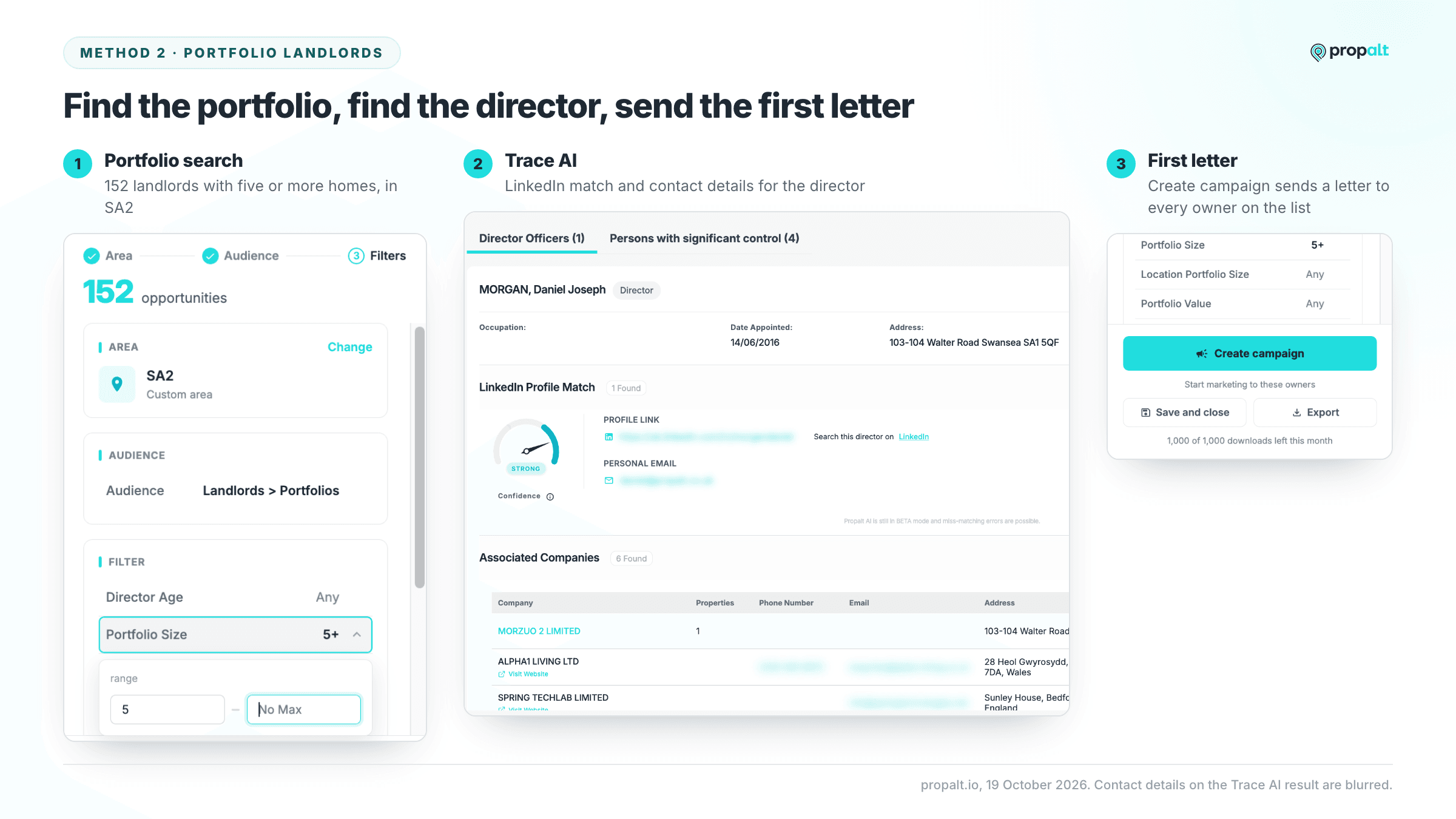
Group properties by owner and focus on the owners who appear several times. Landlords with five or more properties are 17% of landlords but hold 49% of tenancies, according to the same 2024 survey, so a handful of portfolio owners can account for half the rental stock in a postcode.
Propalt does the grouping for you. My Prospects lists the landlords in your area with the number of properties each one owns, the value of the portfolio, its rental roll and whether the landlord is actively buying or selling, so the owners with five or more homes stand out. Trace AI then finds phone numbers and email addresses for the owners on your list, and automated letters send the first approach without a trip to the post office. If you plan to call or email individual landlords, check the PECR rules in the FAQ below first.
Map those homes before you approach anyone. A walking map of a portfolio owner's properties lets you or a negotiator visit, check condition and note what a management service would fix. Larger landlords often operate through a company or a small team, so a connection request on LinkedIn to the person named as director or portfolio manager is a natural second step after the first letter.
Go back to your own records, sorted by what has changed since you last spoke. My Prospects organises this into four lettings views:
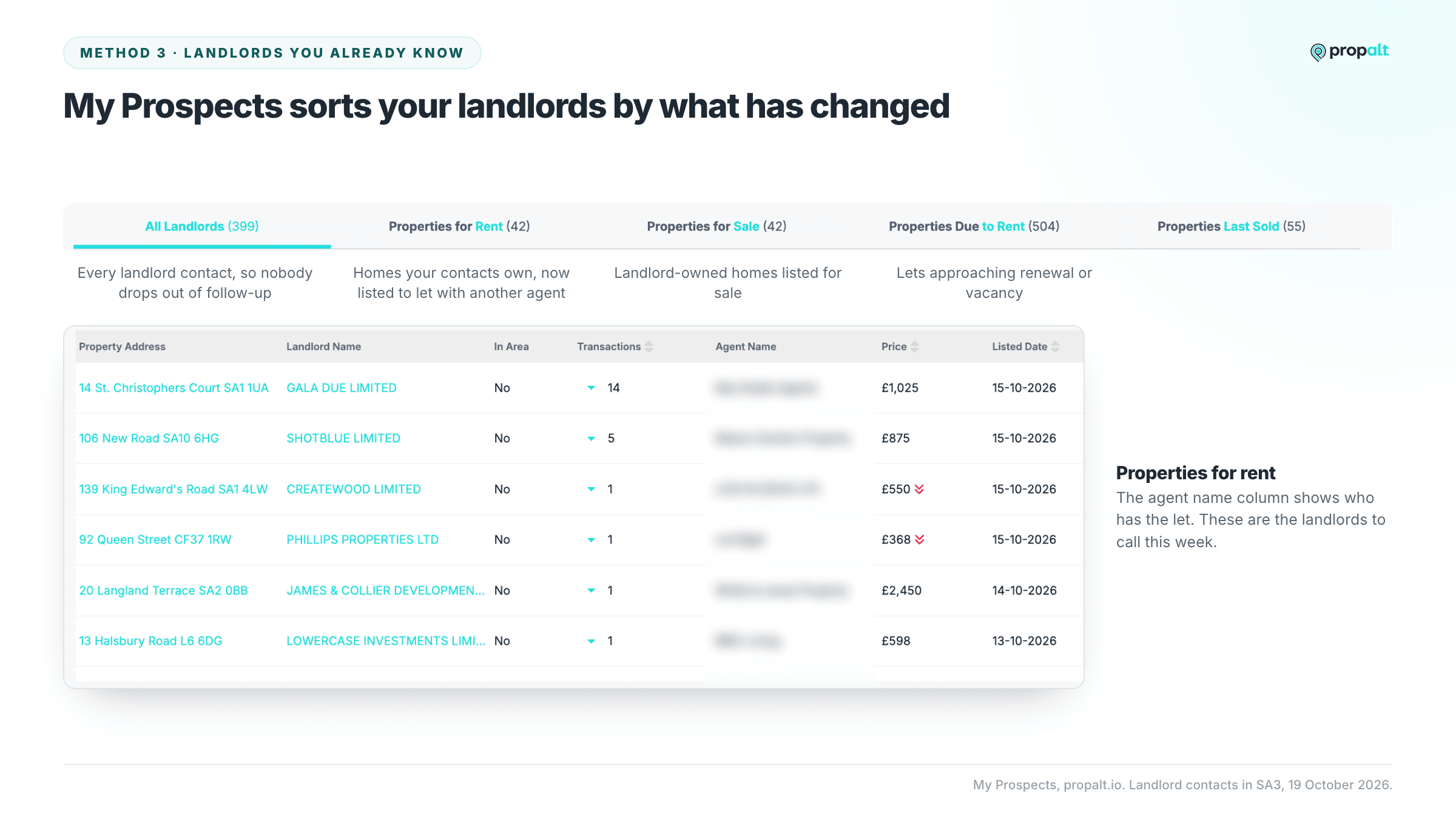
The timing matters more than the message. A landlord whose property has just come back on the market is deciding now.
Write to the owners of similar homes near each property you have just let, using the 20:20 approach: the homes either side and the closest comparable properties. The 20:20 Campaign letter states what you achieved (time to let, rent agreed, tenant quality) for a home like theirs.
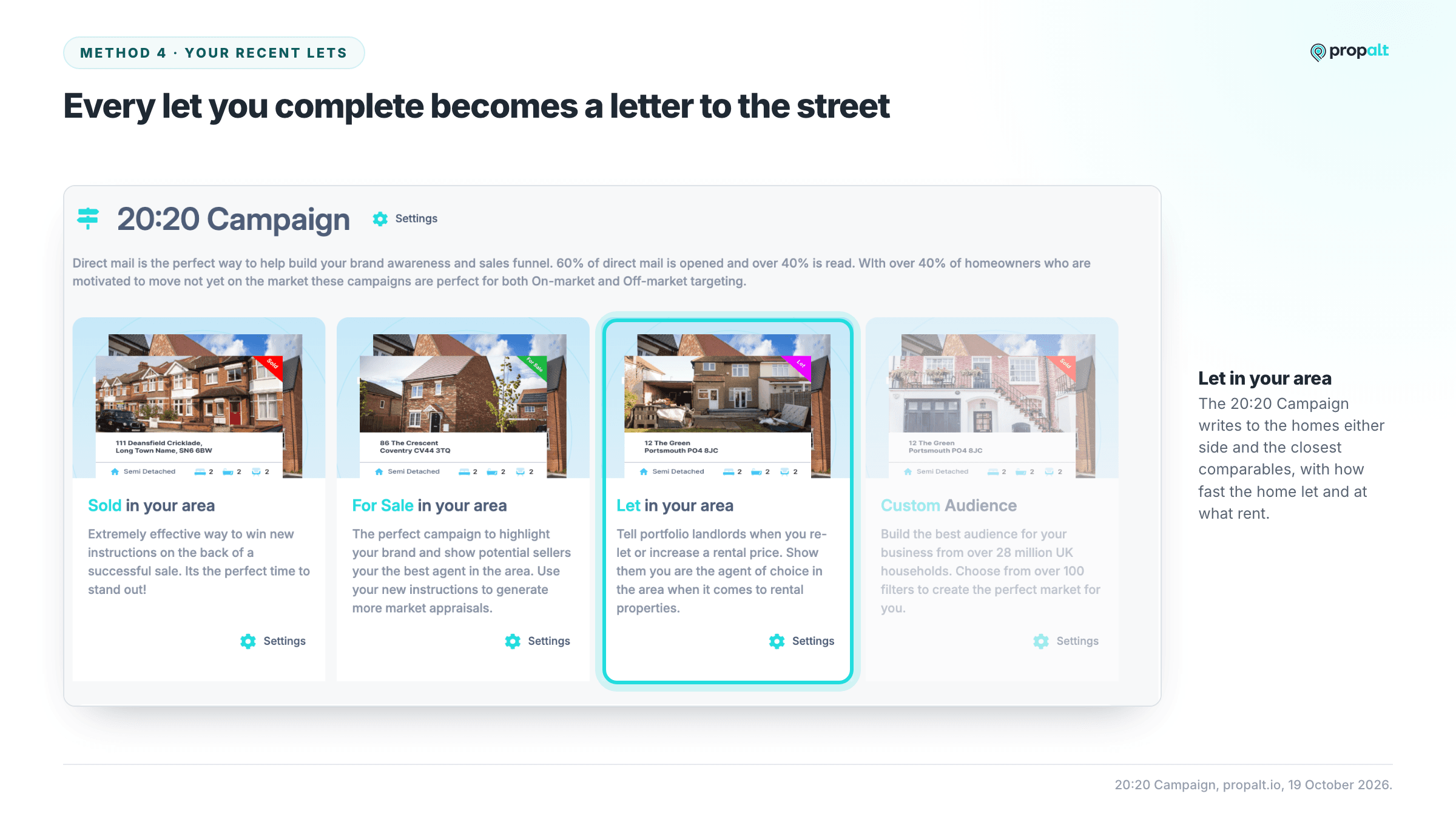
This works because the letter carries evidence rather than a claim. A landlord who reads how quickly a similar flat on their street let, and at what rent, has a reason to compare it with their own last void.
"Evidence from the landlord's own street does the selling a brochure cannot."
Is there a landlord database in the UK? Not a public one yet. The government's PRS Database starts registration in England on 15 December 2026, beginning in the West Midlands and rolling out region by region until November 2027. It is a register for landlords to comply with, not a marketing list. Agents build their own landlord lists from ownership, tenure and listing data.
Can letting agents write to landlords under UK GDPR? Yes, by post, where you can show a legitimate interest and have completed the balancing test. The ICO's guidance, revised in March 2026, confirms direct marketing can be a legitimate interest. Email and text marketing to individuals is stricter and generally needs consent. Any landlord who objects must be removed from all future campaigns.
Why are landlords changing agents in 2026? Section 21 was abolished on 1 May 2026 under the Renters' Rights Act, and fixed-term assured shorthold tenancies were replaced by periodic tenancies. Combined with the PRS Database and the EPC C standard due by October 2030, self-managing landlords face more administration than before, which is the case for full management. Our Renters' Rights Act guide covers the dates in detail.
📌 KEY TAKEAWAY
Half of private landlords in England use no letting agent, and landlords with five or more properties hold half of all tenancies. To find new landlords, start from the property: identify homes that are let, group them by owner, time your approach to the moments landlords reconsider (a new listing, a renewal, a sale) and send evidence from their own street. Keep postal campaigns within the legitimate interests test and never collect landlord details from tenants. Propalt is built on the principle that the best landlord lead is one you found from the data before anyone else did.
SOURCES & DATA REFERENCES
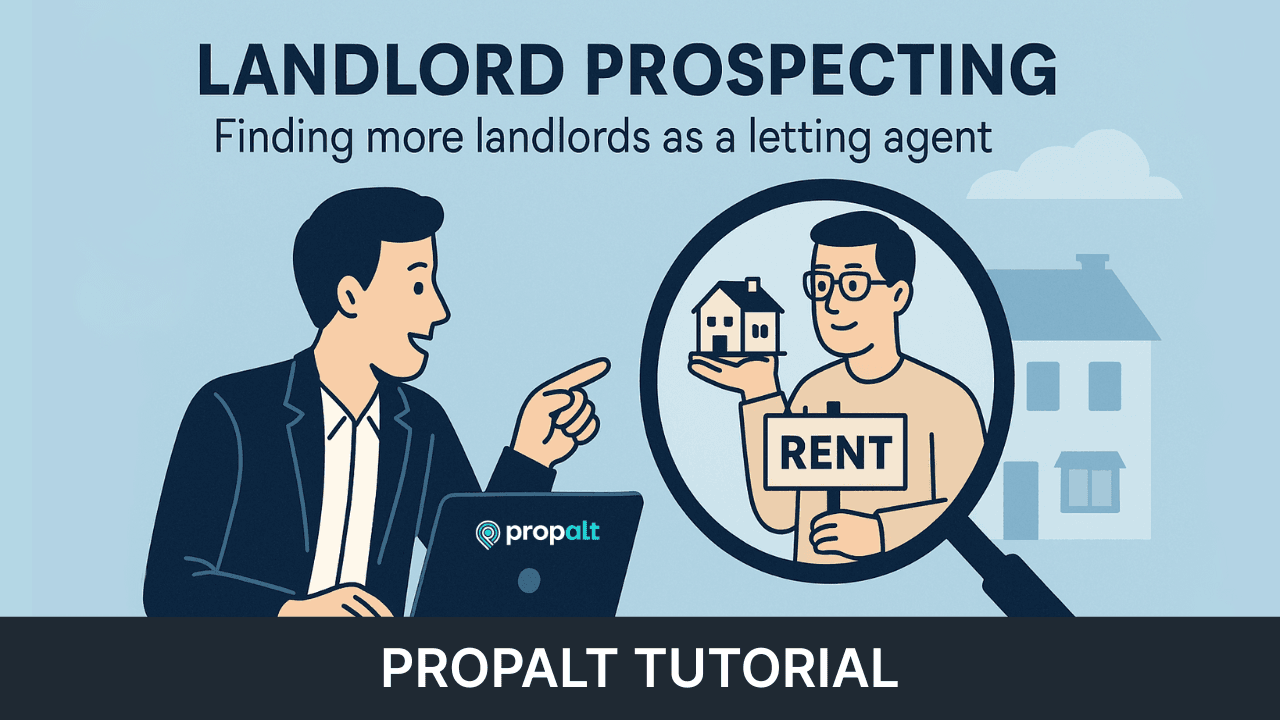
Finding new landlords is a crucial aspect of growing a successful letting agency, but it can often feel like a daunting task. With Propalt, you have access to powerful tools and strategies designed to make this process more effective and efficient.
Dormant Marketing Strategy ...If you’re attending a valuation with one of these sellers, there’s a risk: you leave without an instruction, only a vague promise of “we’ll be in touch once we’ve found something.” Even if they’re sincere, you’re now in a follow-up loop. And meanwhile, another agent could win their trust, find their next home, and take the listing.

During the summer, some listings stall. Some agents go on holiday. And some vendors get fed up. That’s where you come in. Here are six practical tips for improving your on-market canvassing strategy.