Market Analysis
Why Are Flats Not Selling? Check the Building First

November 24, 2026
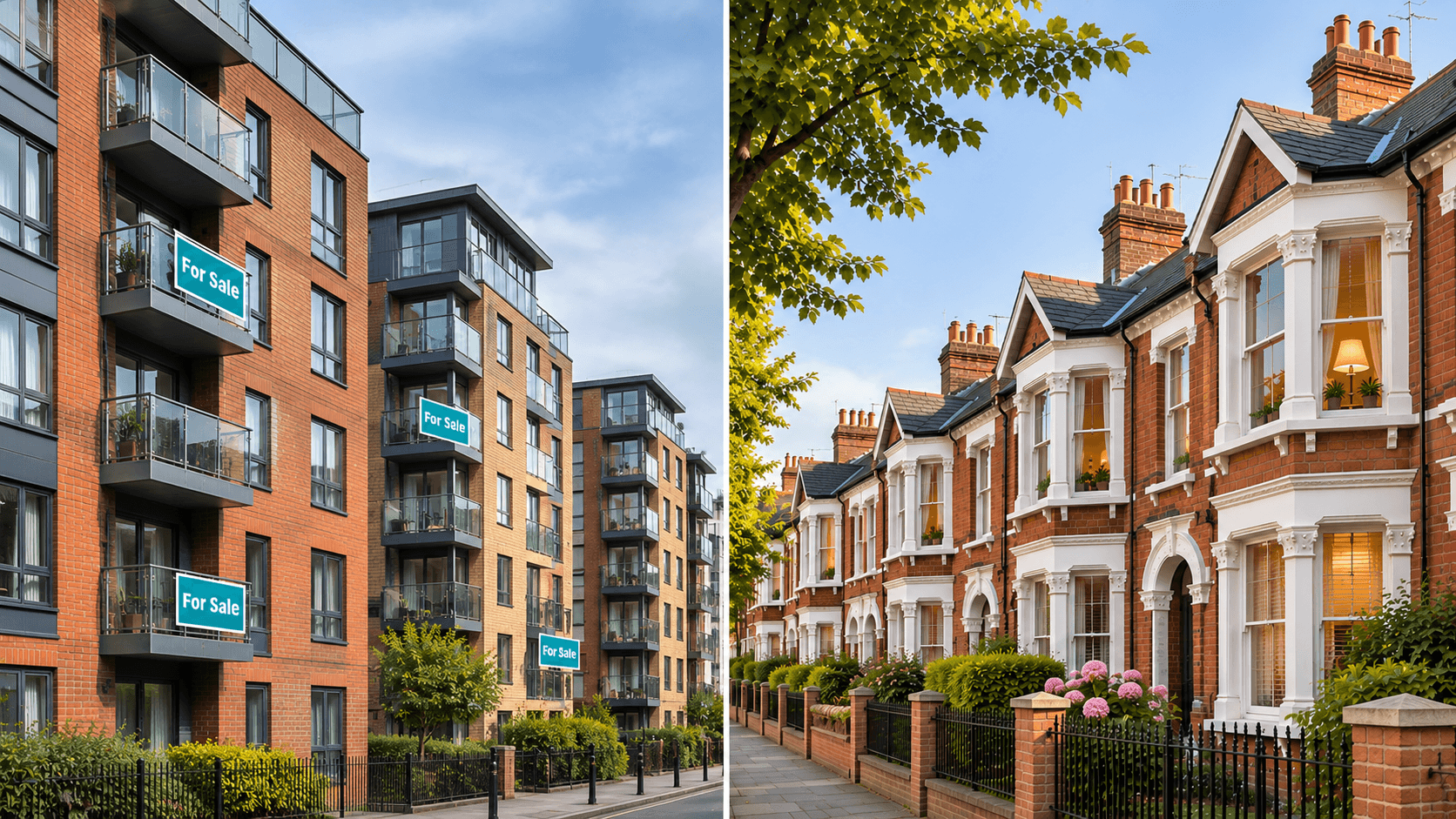
Between July and September 2026, 1,141 new flat listings came to market in Liverpool's L1 postcode district. Fifty-four reached sold subject to contract. That is 21 flats listed for every agreed sale, against 2.3 across England and Wales.
In Plymouth's PL1 and Cardiff's CF11, the figure was 1.5.
Oversupply explains part of why flats are not selling. Propalt's analysis of listings, agreed sales, ownership and property records points somewhere more specific: the type of building. The weakest districts are dominated by investor blocks built in the early 2000s. The strongest are full of older flats, many of them conversions.
What separates a flat that sells from one that sits, and what should agents check before they put a price on it?
In a small number of city-centre districts with large purpose-built apartment stock.
In Canary Wharf (E14), flats took 129 days to go under offer. Many of these districts were built out during the investor-led boom of the late 1990s and early 2000s, and they now hold a large volume of similar flats competing for the same buyers.
In L1, 21 flats were listed for every one that agreed a sale. In Plymouth and Cardiff, it was one and a half.
Because in some blocks the market has moved below what owners paid twenty years ago. Of the 40 most recent flat listings Propalt examined in L1, 33 had a previous Land Registry sale recorded. Sixteen of those were being marketed below their previous purchase price. One flat bought for £245,950 in 2005 was advertised at £75,000.
For agents, that changes the market appraisal conversation. A vendor anchored to their purchase price may be asking for a figure the block has not achieved in years.
How Propalt helps here: Propalt shows the previous Land Registry sale for each property alongside its current listing, so you can see before the market appraisal whether a vendor is likely to be selling below what they paid.
It changes the profile of the market. Propalt found that 43 of the 220 flats currently advertised in L1 were company-owned, almost one in five. In E14 the share was 6%, and in PL1 8%.
Ownership does not tell you why an individual is selling. It does tell you who else is likely to be selling in the same block, and whether you are competing with landlords releasing several units at once.
No. The regional figures vary widely.
Flats also take longer than houses to sell. In Yorkshire, flats took 101 days to reach sold subject to contract, against 69 days for houses. In the North West, it was 96 days against 61. Across the country, the typical asking-price reduction on a flat was 6%, rising to 7.2% in the North East.
Energy efficiency does not explain the gap on its own. The typical flat in Cardiff's CF11, one of the strongest districts, has an EPC rating of D.
At building level, using four checks before the board goes up:
The gap between asking and agreed prices in L1 shows why this matters. Flats on the market had a median asking price of £165,000. Flats that reached sold subject to contract had been advertised at a median of £117,500. These are different sets of flats, so the figures are not achieved prices or individual reductions. They do show that buyers were committing at the lower end of the market. Our guide to property comparables covers how to build that evidence.
Kieran Slinger, CEO and Co-Founder of Propalt, said: "The warning signs are there before the board goes up: who owns the block, what was paid, how many sister flats are already listed and how long they've sat. Agents who check that at the valuation will set a price that sells."
How Propalt helps here: Propalt lets you see listings, agreed sales, reductions and days on market by postcode district and property type, so you can show a vendor the competition their flat faces.
Propalt brings listing activity, sale history, ownership and property records for England and Wales into one platform at propalt.io. Each feature answers one of the questions this article raises, before you walk into the market appraisal.
How it works on a real market appraisal. Before visiting a flat in a large block, an agent can:
The vendor gets a price and a timeline based on their building. The agent gets an instruction priced on evidence from day one.
A vendor asks: why is my flat not selling?
Start with the competition: similar flats nearby, often in the same block, competing for the same buyers at a price that has not adjusted. Check how many comparable flats are listed and what the ones that sold were advertised at.
Can you sell a flat for less than you paid?
Yes, and in some districts it is common. In L1, 16 of the 33 recent listings with a previous sale were marketed below the earlier purchase price.
Are flats hard to sell?
It depends on the building. In Q3 2026, the strongest districts (Plymouth PL1 and Cardiff CF11) were dominated by flats built before 1930, while the weakest were dominated by blocks built in the early 2000s.
How long does it take to sell a flat?
It varies by region. In Q3 2026, flats in Yorkshire took 101 days to reach sold subject to contract, against 69 for houses, and in the North West 96 days against 61.
Is selling a leasehold flat harder?
It can be. Lease length, ground rent and service charges all affect value and mortgageability, alongside the building itself, so check them at the valuation.
In Q3 2026, Liverpool L1 had 21 flats listed for every agreed sale, while Plymouth PL1 and Cardiff CF11 had 1.5. The weakest districts are full of early-2000s investor blocks, high company ownership and owners selling below what they paid. Agents who value flats at building level, checking ownership, purchase history, competing stock and days on market, set prices that sell. Propalt puts that evidence in one place.

Discover the latest insights from the UK's private rented sector in Q3 2023: Record tenant demand, reduced arrears, and improved landlord profitability signal a robust recovery. Read on for an in-depth analysis.

Explore the 2024 UK property market: a landscape shaped by economic shifts and new norms. This article offers landlords and tenants insights for confidently navigating post-pandemic challenges and opportunities. Discover how to thrive in a transforming market.

Learn about the latest changes in the UK housing market in early 2024. Find out about regional trends, the impressive growth in Northern Ireland, the market revival in London, and how sustainability and innovation might affect future property values. This article will give you essential data about how UK real estate is changing, whether you're a first-time buyer, an experienced investor, or just a property enthusiast. Know what these changes mean for you, and stay ahead of the game.