Estate Agency Marketing
Property Ownership Search: How to Find Who Owns a Property in England and Wales

October 28, 2026
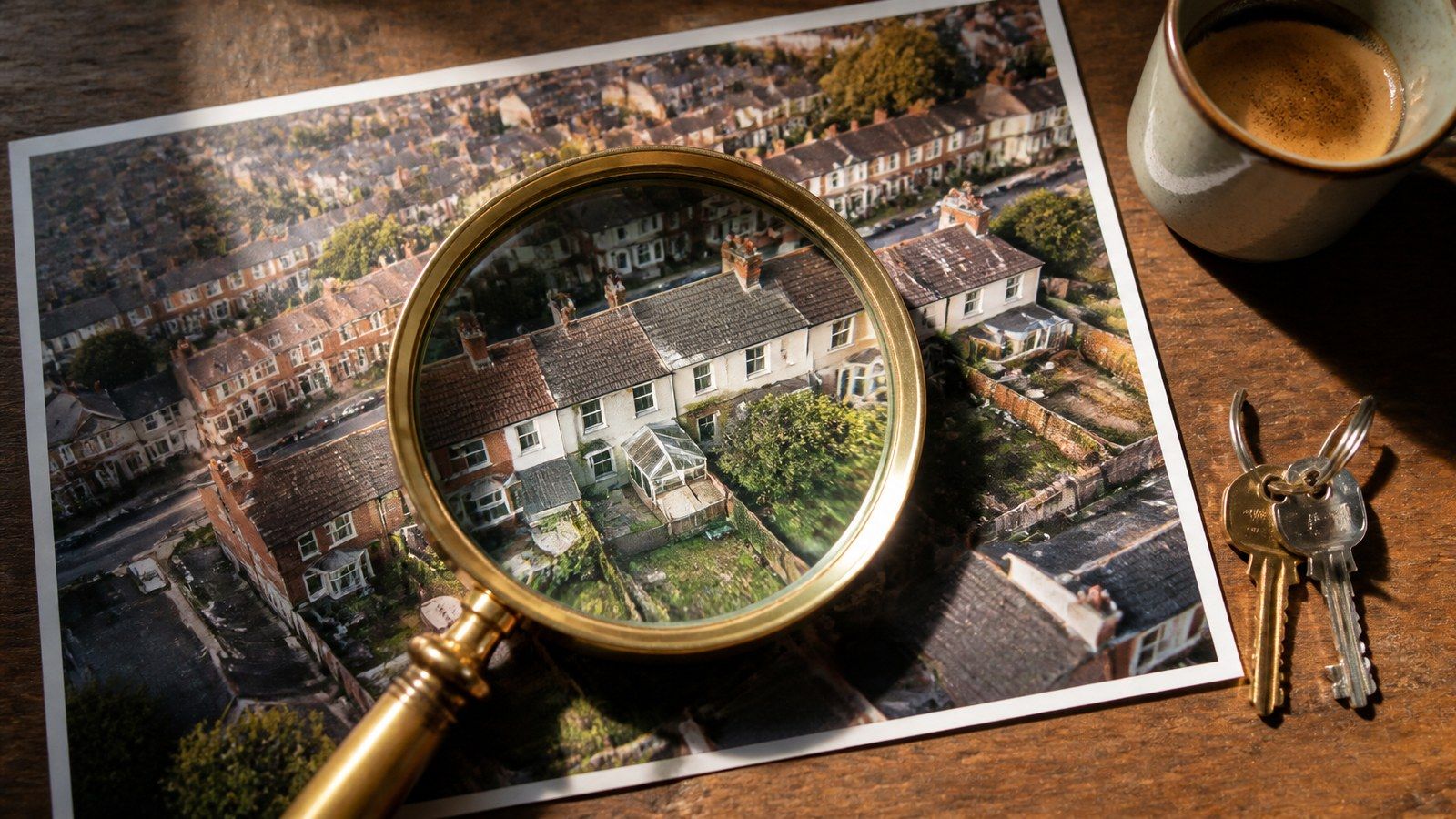
The name of the registered owner of almost any property in England and Wales is a public record. It sits on the title register held by HM Land Registry, and anyone can buy an online copy for £7. That fee rose from £3 on 9 December 2024, the first increase in more than ten years.
For agents trying to reach a landlord, councils trying to contact an owner whose records are out of date, and developers assessing a site, the register is the starting point. It is not always the end point. Some property is unregistered, some is filed under an unexpected address, and a name on its own is not a way to get in touch.
So what does a property ownership search actually involve, what does it cost, and where does it fall short?
Search HM Land Registry's register by address on GOV.UK, then buy the title register for that property. The register names the registered owner, the price paid where recorded, any mortgage lender, and restrictions or covenants on the title.
The search itself returns a free property summary first, showing the title number and whether the title is freehold or leasehold. Check that summary before you pay, especially for flats, where the building and each flat often have separate titles.
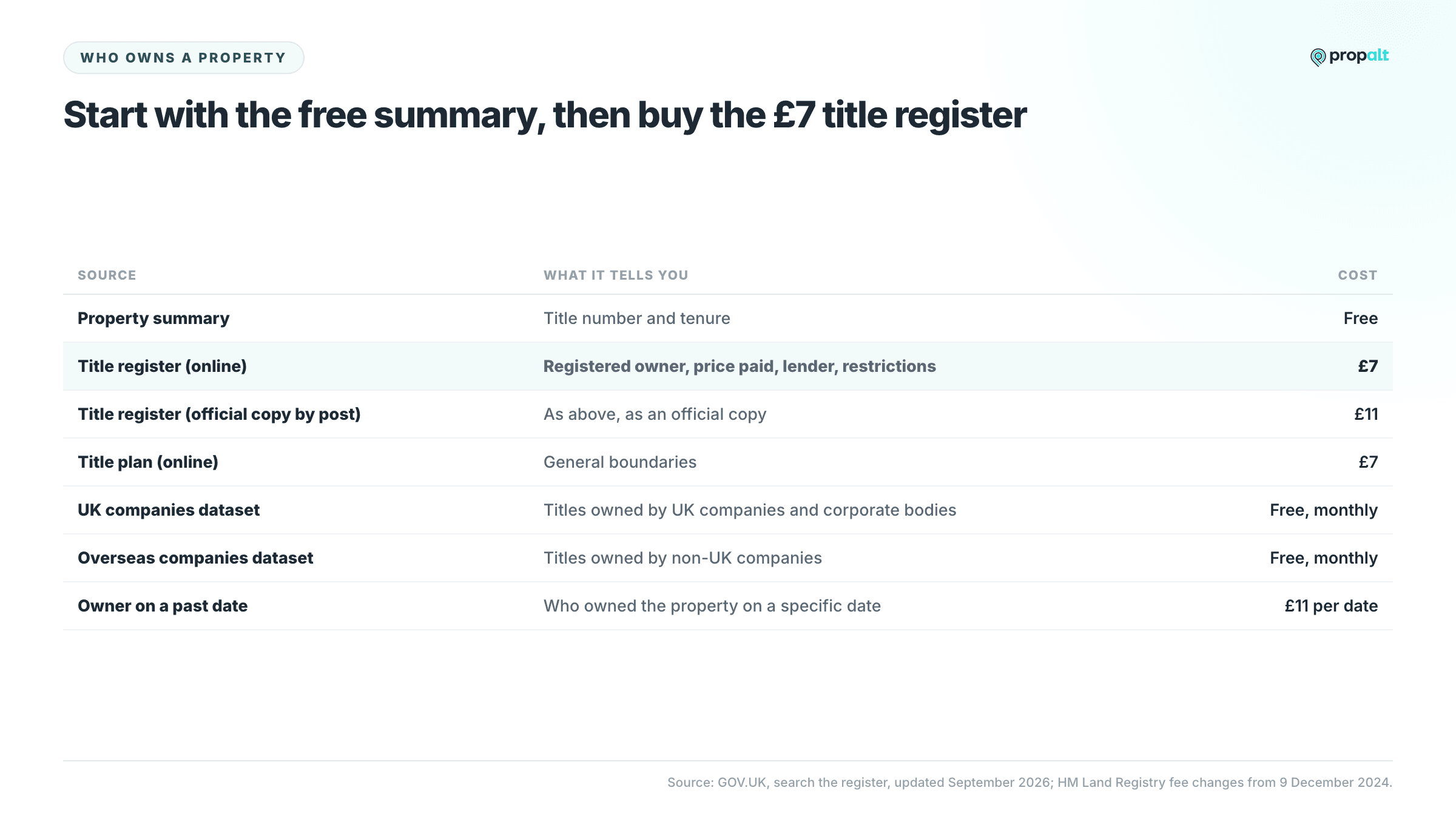
The table below sets out the main sources and what each costs.
| Source | What it tells you | Cost |
|---|---|---|
| Property summary | Title number and tenure | Free |
| Title register (online) | Registered owner, price paid, lender, restrictions | £7 |
| Title register (official copy by post) | As above, as an official copy | £11 |
| Title plan (online) | General boundaries | £7 |
| UK companies dataset | Titles owned by UK companies and corporate bodies | Free, monthly |
| Overseas companies dataset | Titles owned by non-UK companies | Free, monthly |
| Owner on a past date | Who owned the property on a specific date | £11 per date |
A title plan is the map that goes with a registered title. It shows where the property is and its general extent, usually outlined in red on an Ordnance Survey base. Other colours can mark land affected by a specific entry in the register, such as a covenant that covers only part of a garden.
The plan does not fix the exact boundary. Under section 60 of the Land Registration Act 2002, most registered titles show only general boundaries. HM Land Registry's own guidance says the legal boundary is rarely identified with any precision, and there is no set tolerance between the red line and where the boundary falls on the ground. Who owns a wall or fence is shown only where the deeds lodged at registration say so.
Register and plan do different jobs. The title register is the written record: the title number, who owns the property, what they paid for it where available, any rights of way, and whether a mortgage has been discharged. The plan is the picture of the land that register describes. HM Land Registry says the plan should always be read with the register.
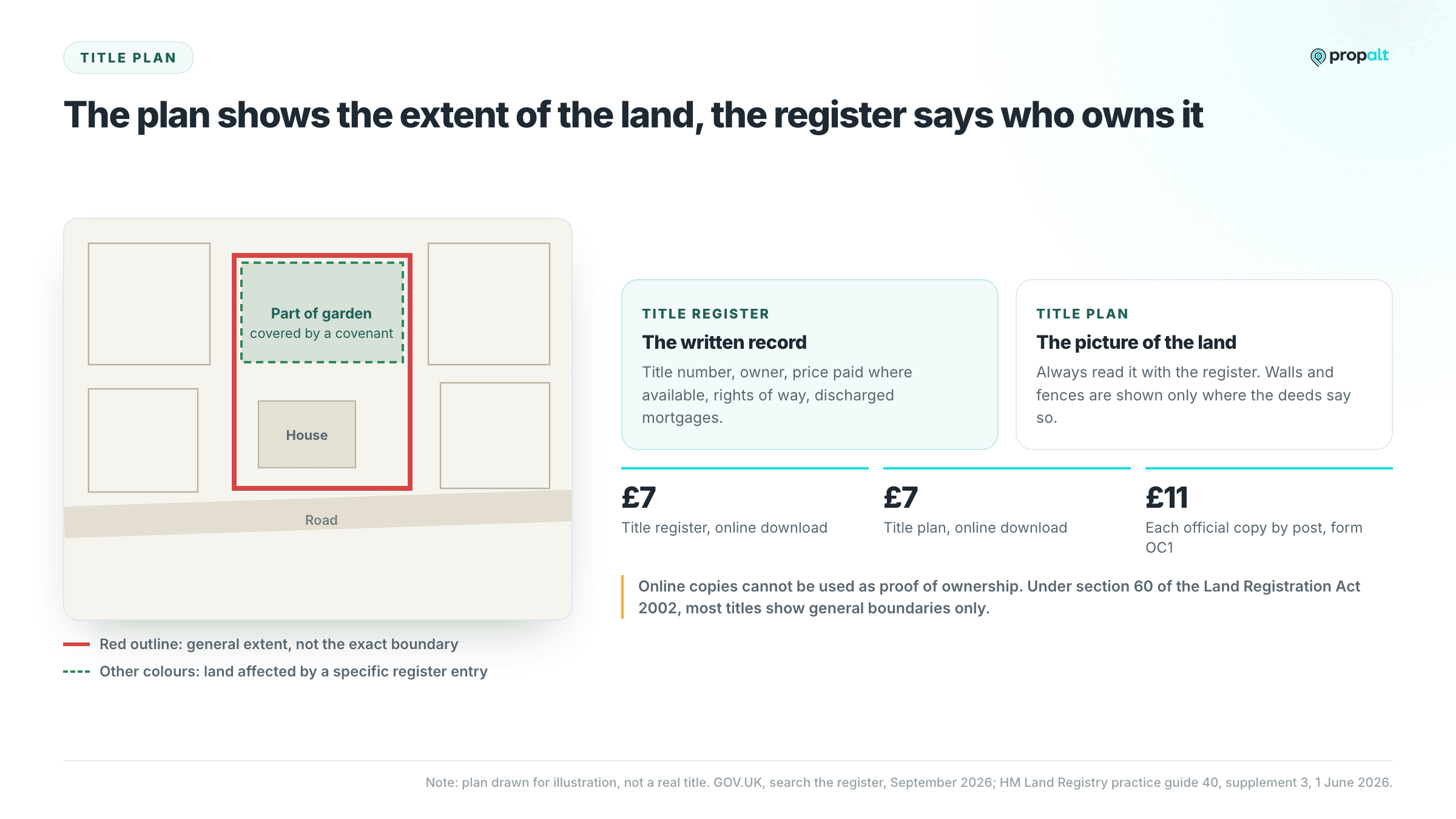
How to order one. Search the register through GOV.UK by address or location. As of October 2026, an online copy costs £7 for the title register and £7 for the title plan, as a download. Online copies cannot be used as proof of ownership. Official copies cost £11 each by post using form OC1.
When an agent needs it. Order the plan when the extent of what is being sold matters: a vendor's garden or driveway, a side plot with development potential, a shared access, or a title that may cover more than one house. It is also worth having before a market appraisal where the plot size drives the price, and before writing to the owner of land next to a new instruction, so you know which title you are approaching.
No. The register is public, and you do not need to own the property, or have the owner's consent, to buy a copy of its title register. That openness is deliberate: the register exists so that anyone dealing with land can see who owns it.
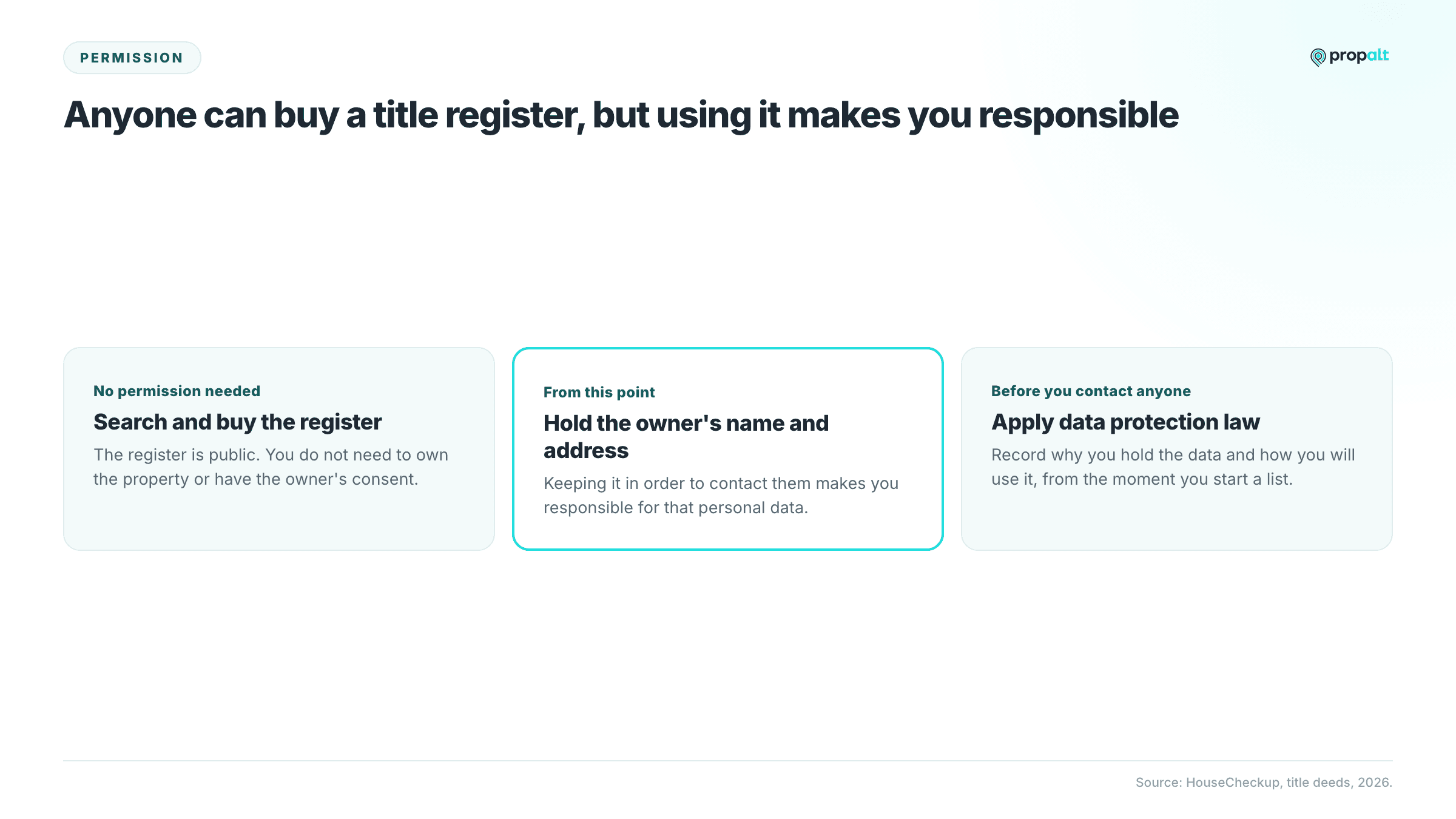
It also means the responsibility shifts to you once you use the information. Holding an owner's name and address in order to contact them makes you responsible for that personal data, so the data protection points at the end of this article apply from the moment you start building a list.
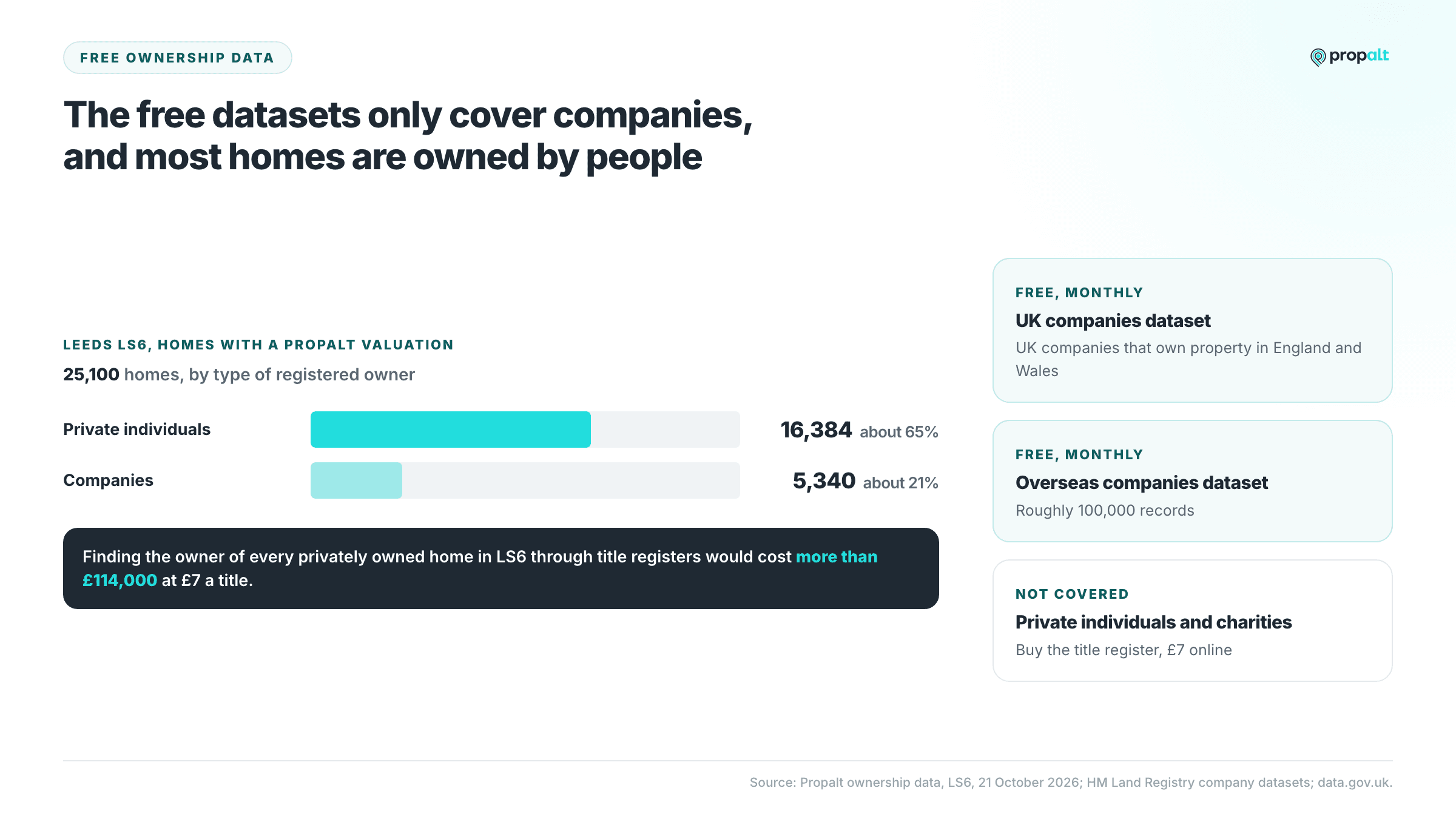
Only if a company owns it. HM Land Registry publishes two free datasets every month: UK companies that own property in England and Wales, and overseas companies that own property in England and Wales. The overseas file alone contains roughly 100,000 records.
The concession matters. Neither dataset covers private individuals or charities, and most homes are owned by individuals. For a typical house or flat, buying the title register (£7 online) is the reliable way to get the owner's name.
The gap is large even in a busy rental area. Propalt's ownership data for Leeds LS6 shows 5,340 of 25,100 homes with a Propalt valuation registered to companies, about 21%, and 16,384 registered to private individuals, about 65%. Finding the owner of every privately owned home in that one outcode through title registers would cost more than £114,000 at £7 a title.
Propalt's Location Analysis maps every property in an area, including privately owned, landlord owned and government owned homes, so you can see where company and private ownership sit before you buy a single title.
If a company does turn up as the owner, our guide on checking whether a property is owned by a limited company explains what to do next.
"For most homes, the cheapest legitimate route to the owner's name is £7 on GOV.UK."
Usually for one of two reasons. Either the property is unregistered, or it is filed under a different address.
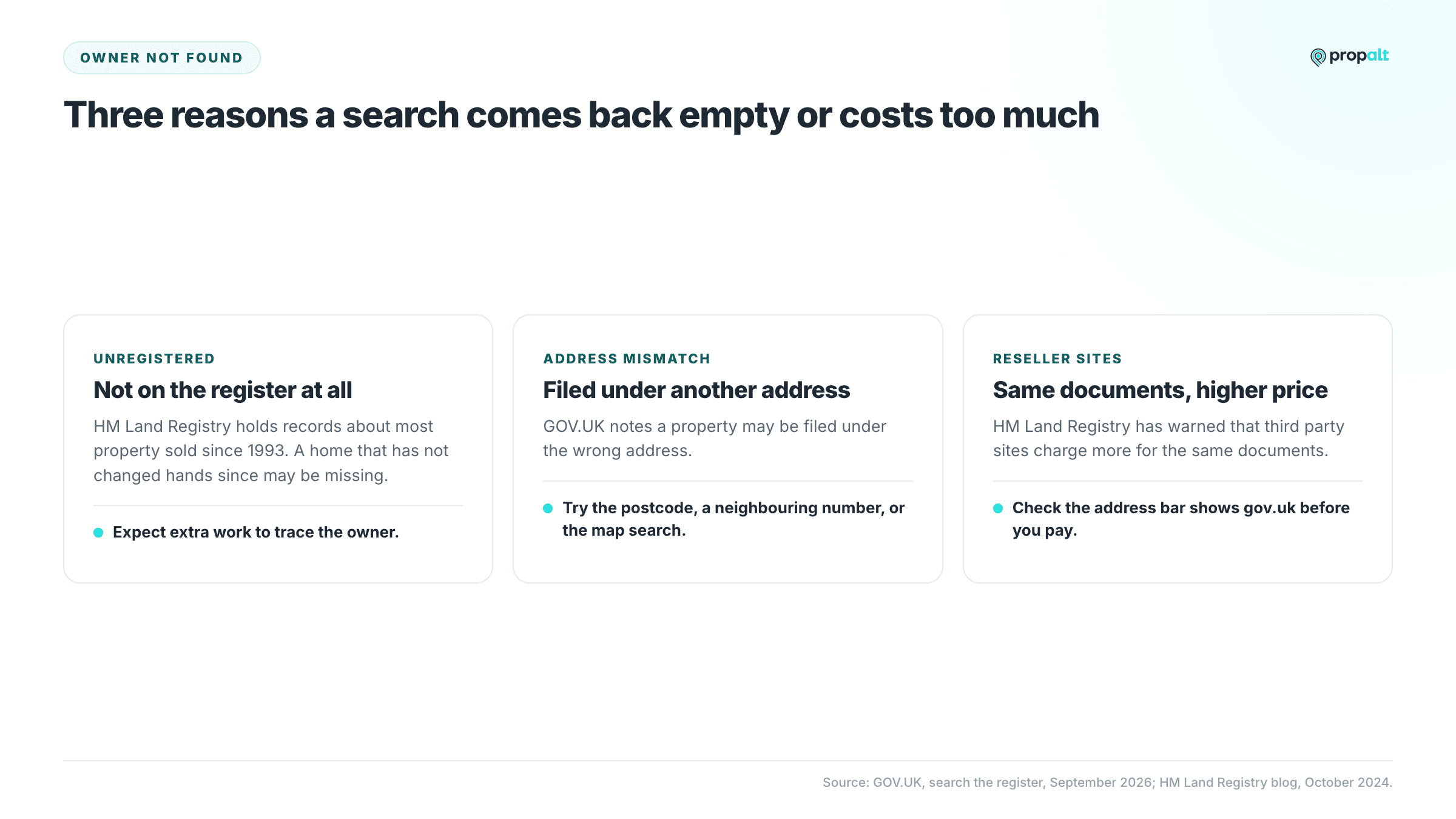
Address mismatches are one reason property data is increasingly matched on the UPRN, the unique reference given to every addressable property, rather than on the address text. Our guide to what a UPRN is explains how the identifier works.
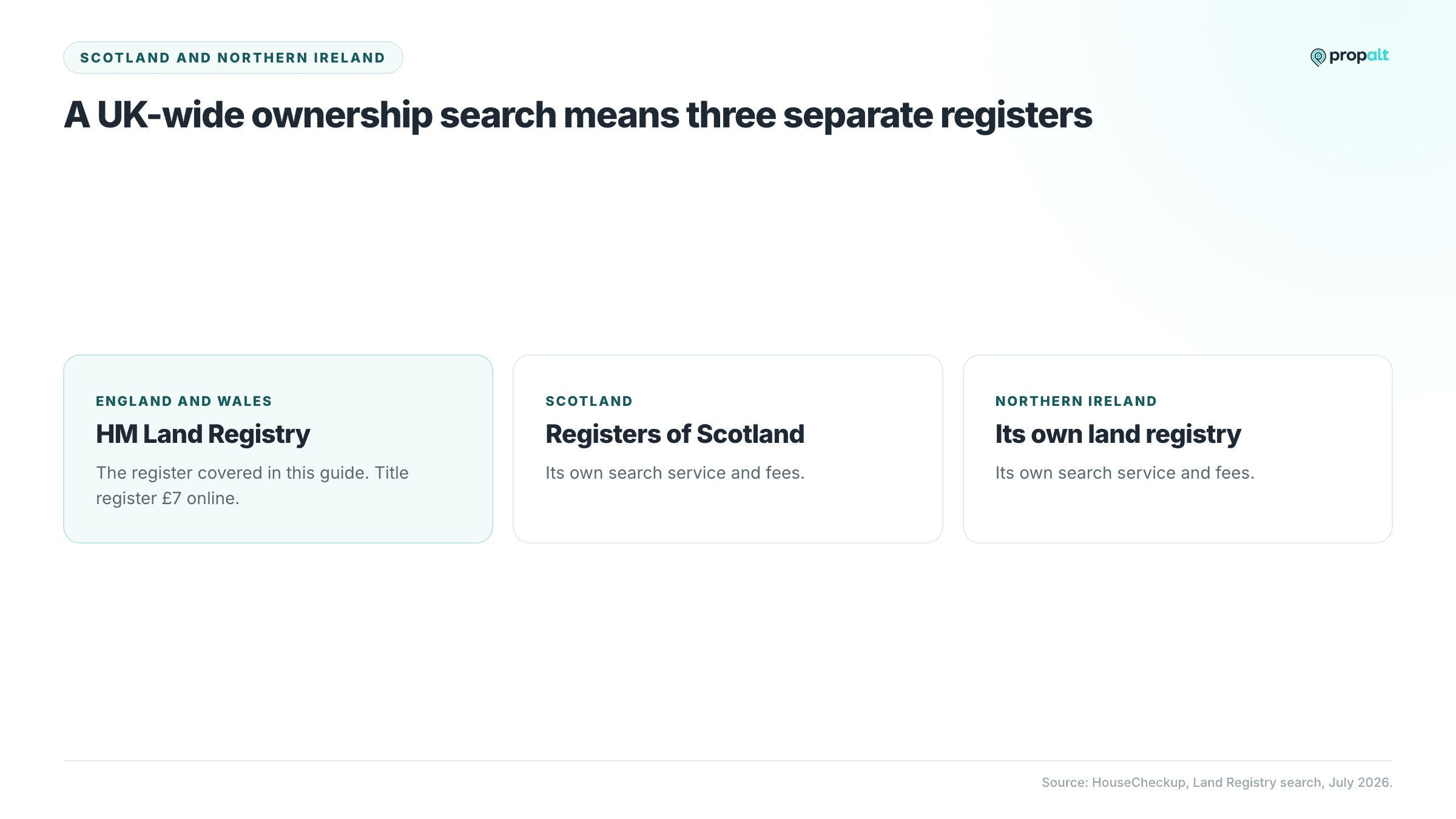
No. HM Land Registry covers England and Wales only. Scotland has Registers of Scotland, and Northern Ireland has its own land registry, each with its own search service and fees. A property ownership search across the UK means three systems. Our guide to how to find out who owns a property or land in the UK compares the routes in more detail.
A name is the start. The title register gives an address for the owner, which may be the property itself or an address that has not been updated in years. Turning a name into a conversation takes more work.
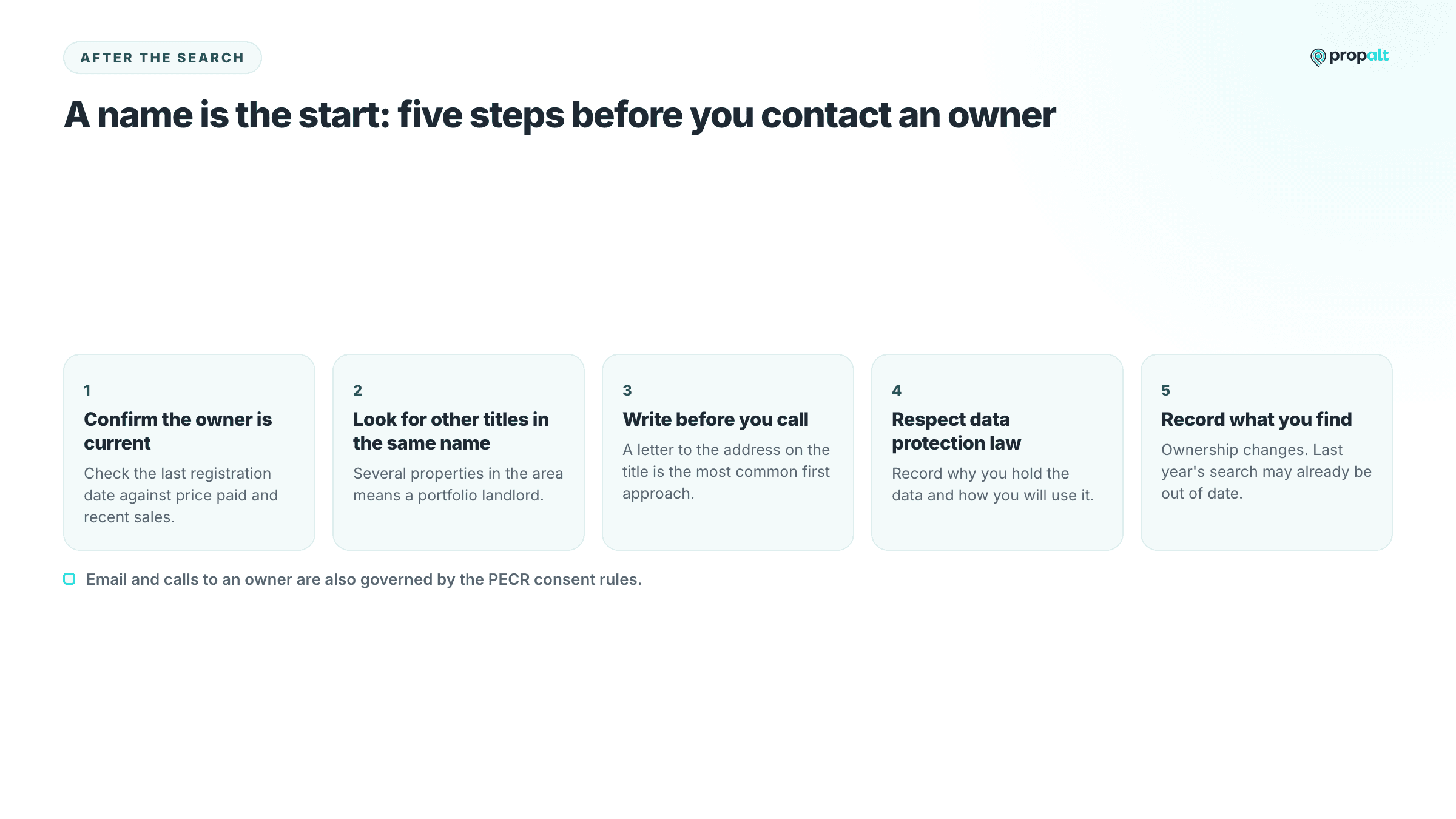
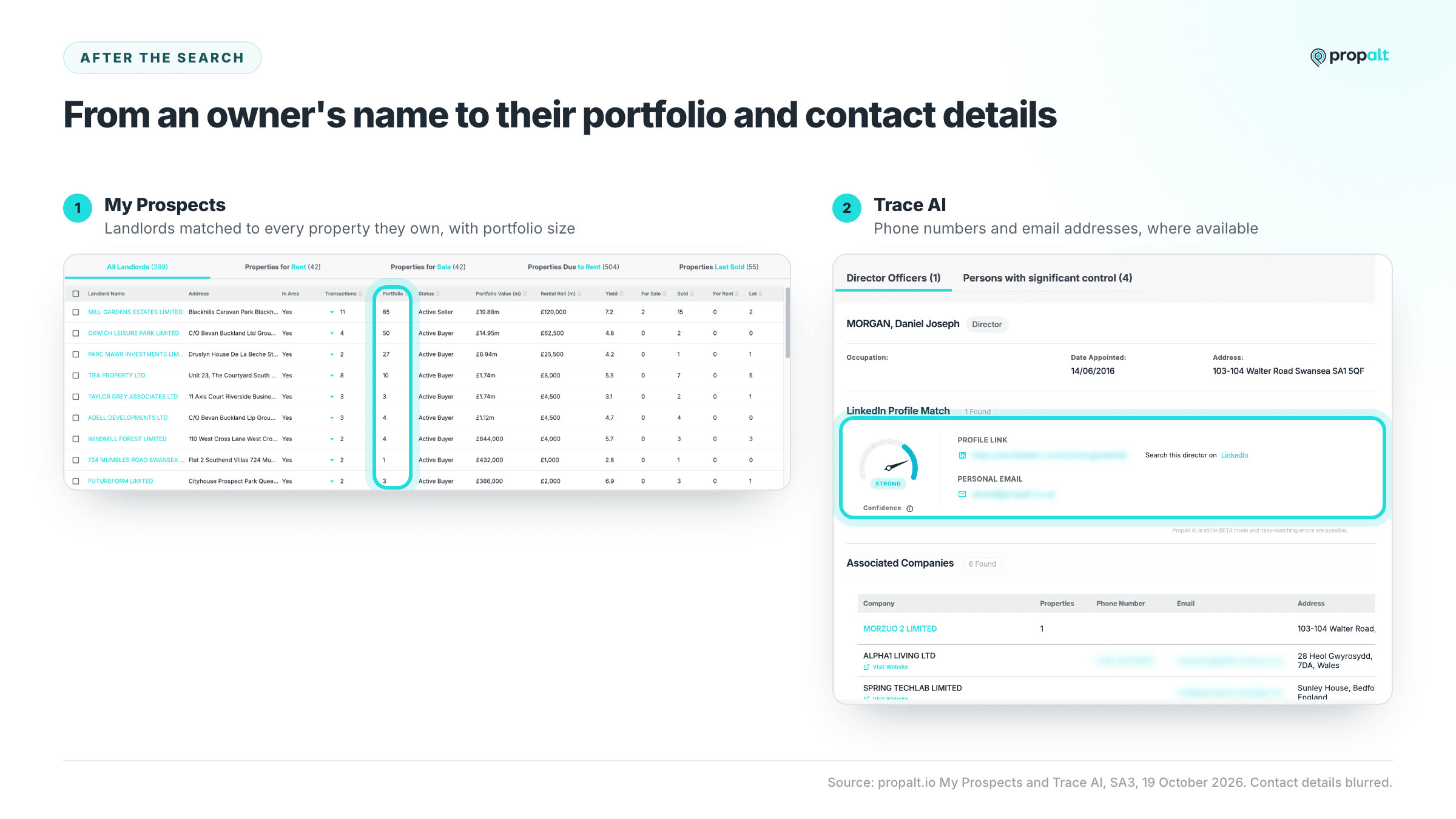
Propalt's My Prospects matches landlords to every property they own, and Trace AI finds phone numbers and email addresses where they are available. How you then contact an owner is still governed by data protection law and, for email and calls, by the PECR consent rules.
Key takeaway. A property ownership search in England and Wales starts with HM Land Registry: a free summary, then a £7 title register that names the owner. Company owned property can be found free in two monthly datasets, but most homes are owned by individuals, and unregistered or misaddressed titles need extra work. Propalt is built on the principle that ownership data is only useful once it tells you who to contact and when.
Sources and data references
Propalt data. Propalt (21 October 2026). Main residential property types with a Propalt valuation in outcode LS6, by registered proprietor type (private, business), from Propalt's ownership data.
Dormant Marketing Strategy ...If you’re attending a valuation with one of these sellers, there’s a risk: you leave without an instruction, only a vague promise of “we’ll be in touch once we’ve found something.” Even if they’re sincere, you’re now in a follow-up loop. And meanwhile, another agent could win their trust, find their next home, and take the listing.

During the summer, some listings stall. Some agents go on holiday. And some vendors get fed up. That’s where you come in. Here are six practical tips for improving your on-market canvassing strategy.

Discover the latest on UK mortgage approvals and house price trends in our article, providing essential insights for homebuyers, sellers, and market enthusiasts.