Estate Agency Marketing
Canvassing With Seller Reports: How to Win More Instructions

November 2, 2026

A generic flyer tells an owner that you sell houses. A seller report tells them something about their own house. That difference decides whether the envelope goes in the recycling or on the kitchen table.
Canvassing with seller reports means sending a short, branded report built for one property: its details, what comparable homes sold for, local planning activity, and a cover letter that explains why you are writing. It takes more effort per address than a flyer, so it is for the homes you most want to win, not for a whole postcode.
So which homes deserve a report, what goes in it, and how do you get from report to market appraisal?
Because it is about the reader's home. A flyer competes with every other piece of mail on the mat. A report about the owner's own property is harder to throw away unread.
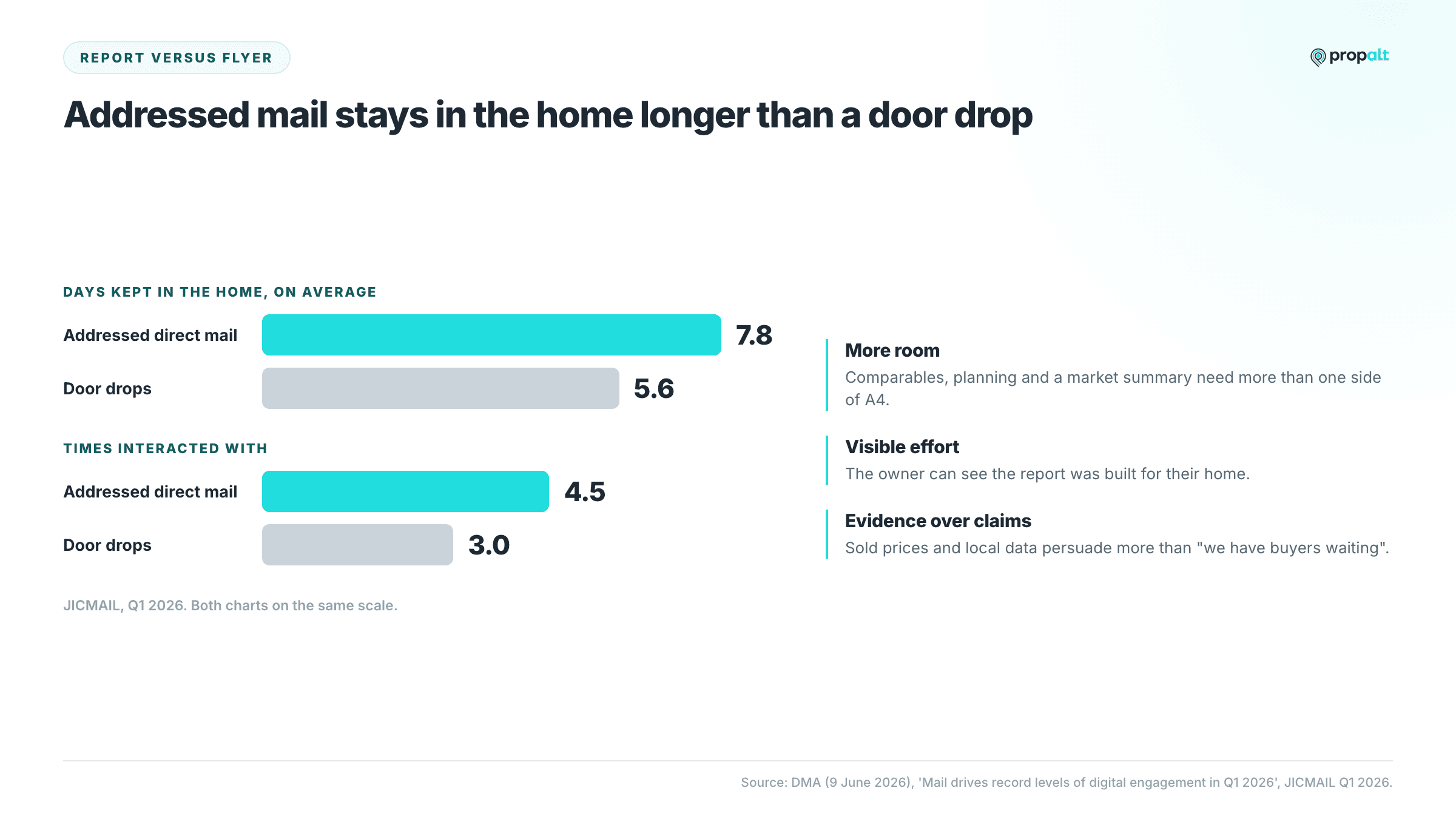
JICMAIL's Q1 2026 data, reported by the DMA in June 2026, shows how much attention mail already gets: addressed direct mail stayed in the home for 7.8 days on average and was interacted with 4.5 times, against 5.6 days and 3.0 interactions for door drops. A seller report gives that attention something to work on.
The format also does three things a letter cannot:
"A flyer says you sell houses. A seller report says you have already looked at theirs."
Homes where one instruction justifies the work. Good candidates:
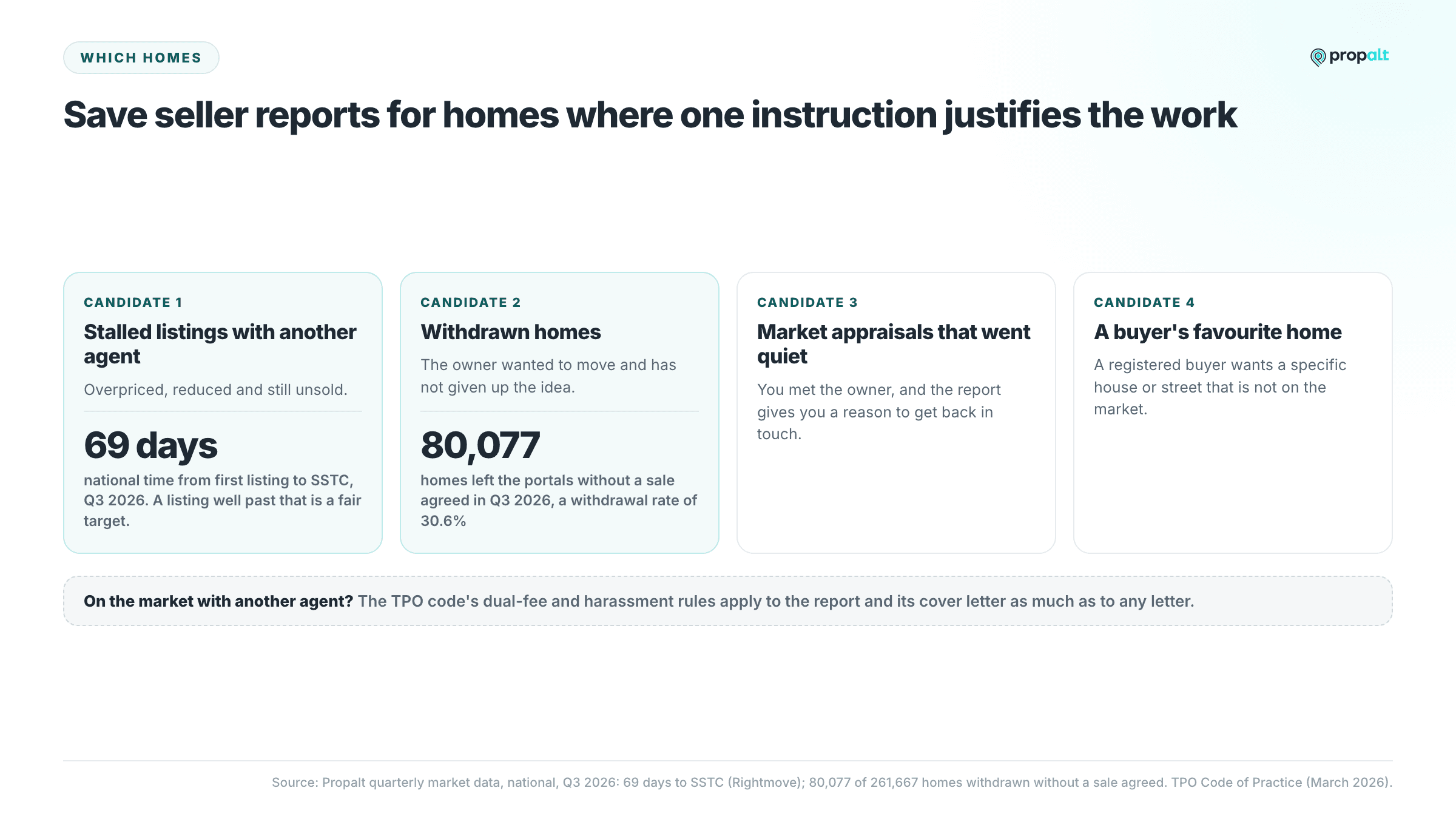
If the home is on the market with another agent, read our guide to on-market canvassing first. The TPO code's dual-fee and harassment rules apply to the report and its cover letter as much as to any letter.
For owners you appraised who are not ready yet, our guide to winning the instruction before the owner is ready to sell sets out a dormant marketing approach.
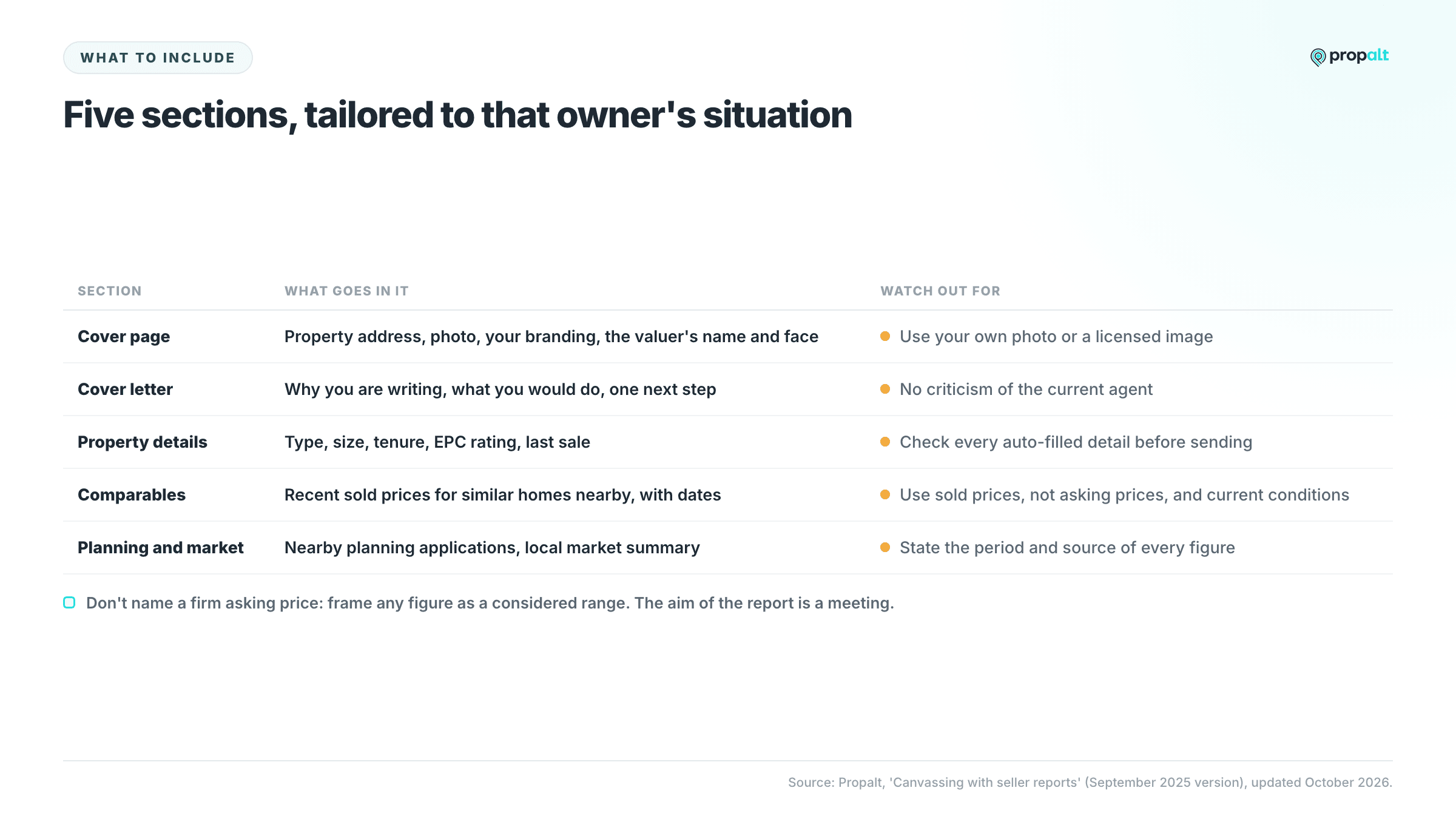
Five sections, tailored to that owner's situation.
| Section | What goes in it | Watch out for |
|---|---|---|
| Cover page | Property address, photo, your branding, the valuer's name and face | Use your own photo or a licensed image |
| Cover letter | Why you are writing, what you would do, one next step | No criticism of the current agent |
| Property details | Type, size, tenure, EPC rating, last sale | Check every auto-filled detail before sending |
| Comparables | Recent sold prices for similar homes nearby, with dates | Use sold prices, not asking prices, and current conditions |
| Planning and market | Nearby planning applications, local market summary | State the period and source of every figure |
Three tone rules from our earlier version of this guide still hold:
If you use a property you sold in the report, remember TPO clause 3b: where completion has occurred, you need the new owner's prior written permission to use it in canvassing material.
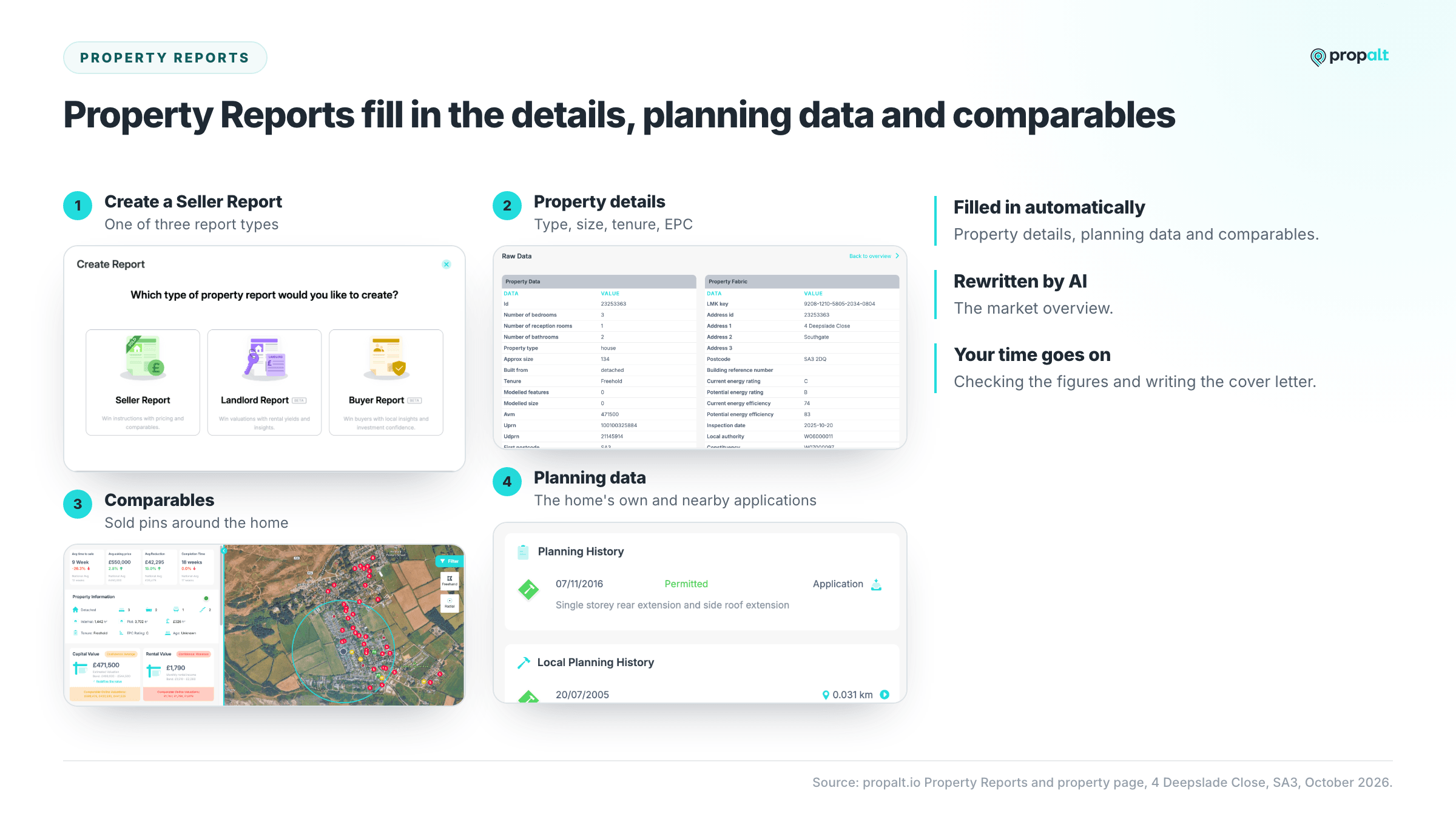
In Property Reports, the property details, planning data and comparables fill in automatically and the market overview is rewritten by AI, so your time goes on checking the figures and writing the cover letter. Our tutorial on how to create a seller report walks through each section, and our guide to choosing property comparables covers which sales to include.
In print, with a digital link. Post the printed report with a one-page cover letter, and put a QR code on the letter that opens the live version. The owner can share the link with a partner, and you get a second route back to you.
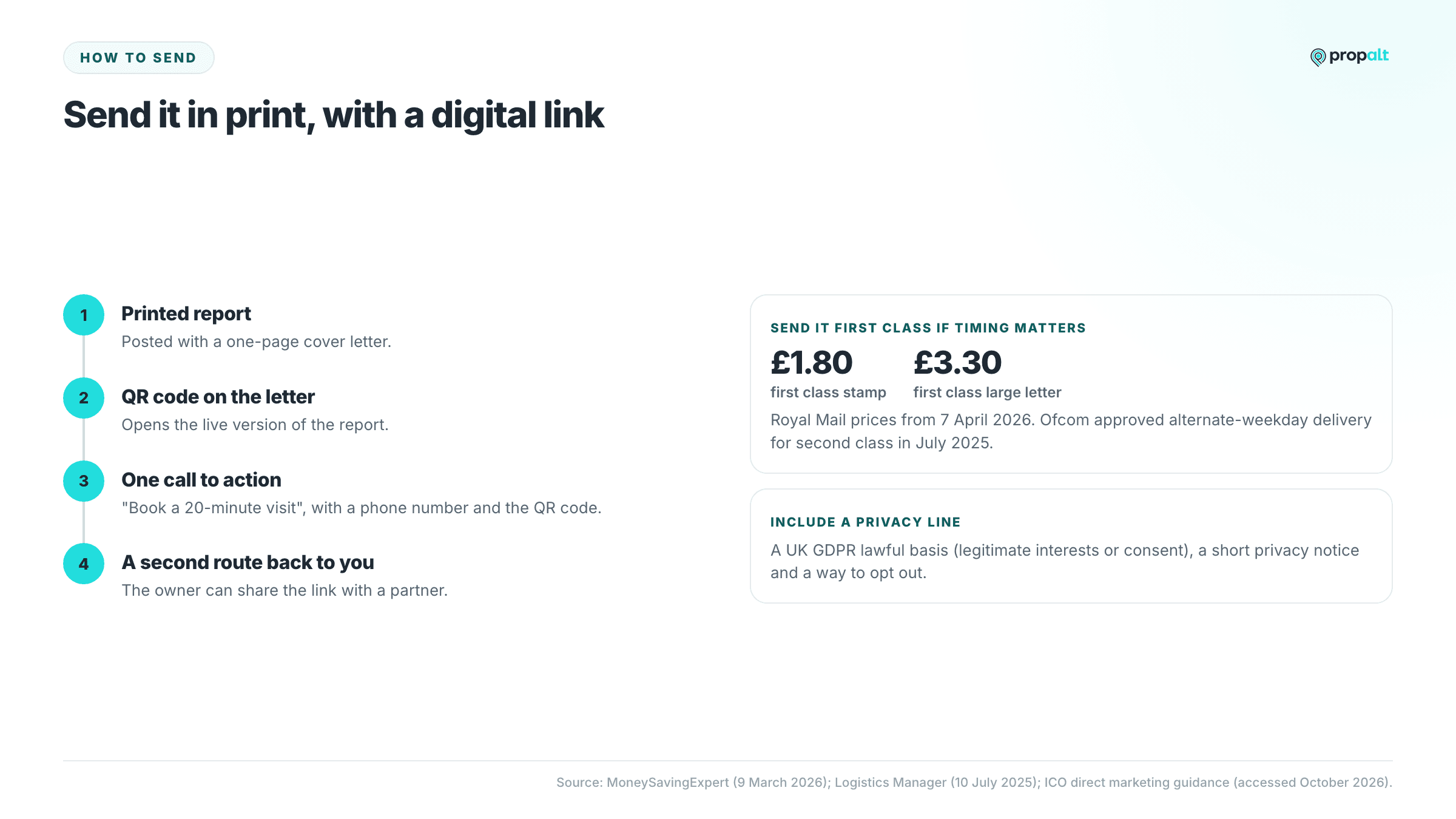
Practical points:
With new information, on a schedule, and with a clear stop point.
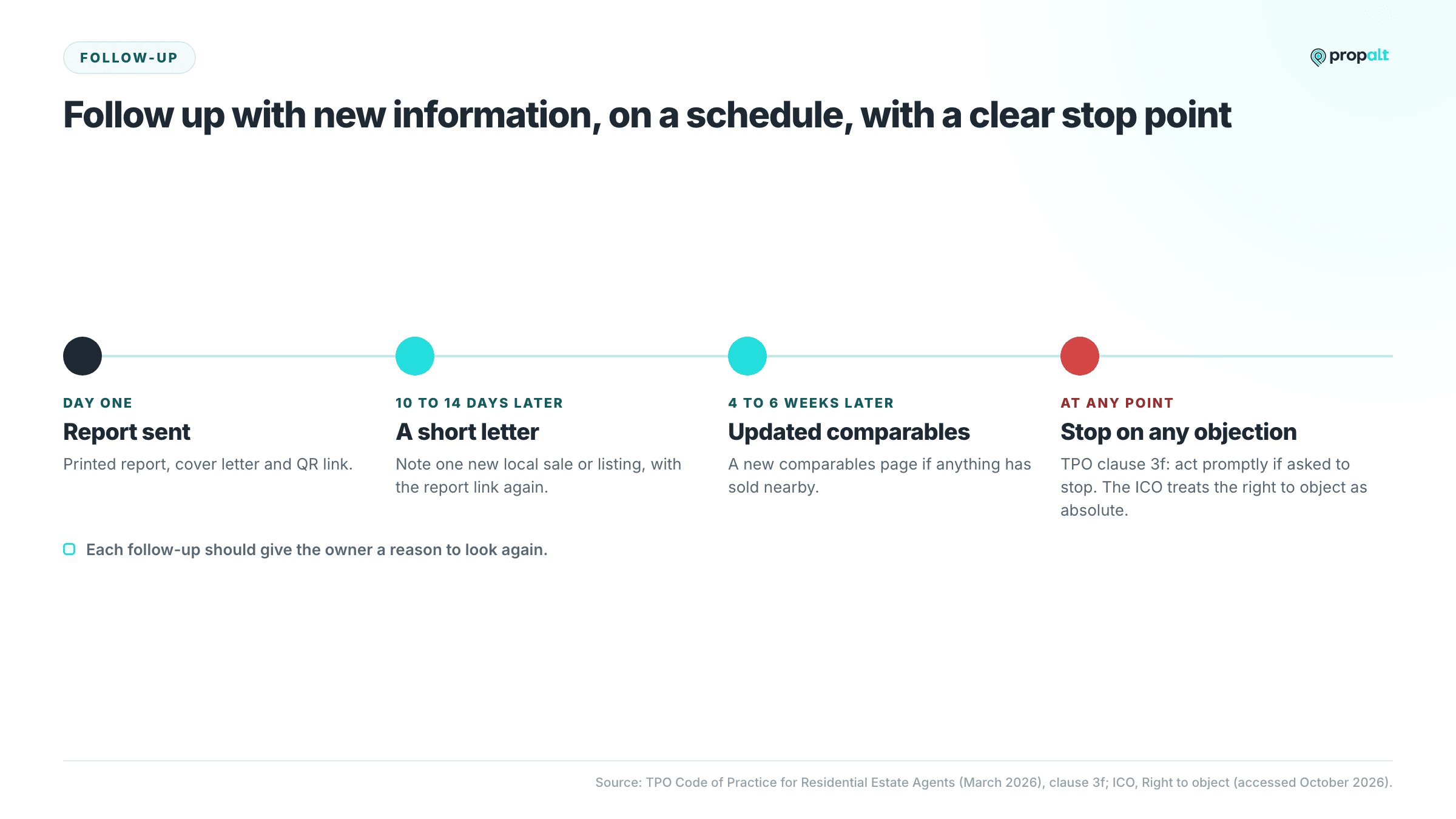
Each follow-up should give the owner a reason to look again. Our guide to the rule of seven covers how to space a sequence, and direct mail for estate agents covers cost and targeting.
Canvassing with seller reports works because the owner receives something about their own home: property details, recent sold comparables, planning activity and a cover letter that asks for a meeting. Reserve reports for the homes worth the effort (stalled listings, withdrawals, quiet market appraisals and buyers' favourite homes), send them in print with a digital link, follow up with new facts and stop at the first objection. Propalt's Property Reports build that branded seller report with property details, planning data, comparables and a market overview, ready to print or send as a link.

There’s a new buzz in the industry. Shiny new tools launching, promising to get your listings in front of AI platforms like Gemini, ChatGPT, and Copilot. The pitch is simple: markets are consumer driven and as the public turns to AI over traditional search engines, agents need to make sure their properties can still be found.

December often sees many agents down tools, especially when it comes to canvassing. But while the market may slow, it certainly doesn’t stop. Portal traffic surges on Boxing Day as homeowners start thinking ahead, and you want your agency to be the one they search for when Christmas is over. It’s also the season of conversation, family, friends, and neighbours catching up, swapping stories, and sharing plans. That makes it prime time for word-of-mouth referrals, but only if your agency is already top of mind. Remember, most potential vendors don’t abandon their moving plans over Christmas, they simply pause them.

What if an agent could ask ChatGPT about their patch and get answers based on live property data, not guesswork? That is now possible with Propalt. From sold comparables and rental demand to pricing trends and landlord signals, Propalt inside ChatGPT helps teams move from manual research to clear, usable insight.