Estate Agency Marketing
Online Valuation Tools for Estate Agents: Turning Website Visitors into Valuations

October 28, 2026
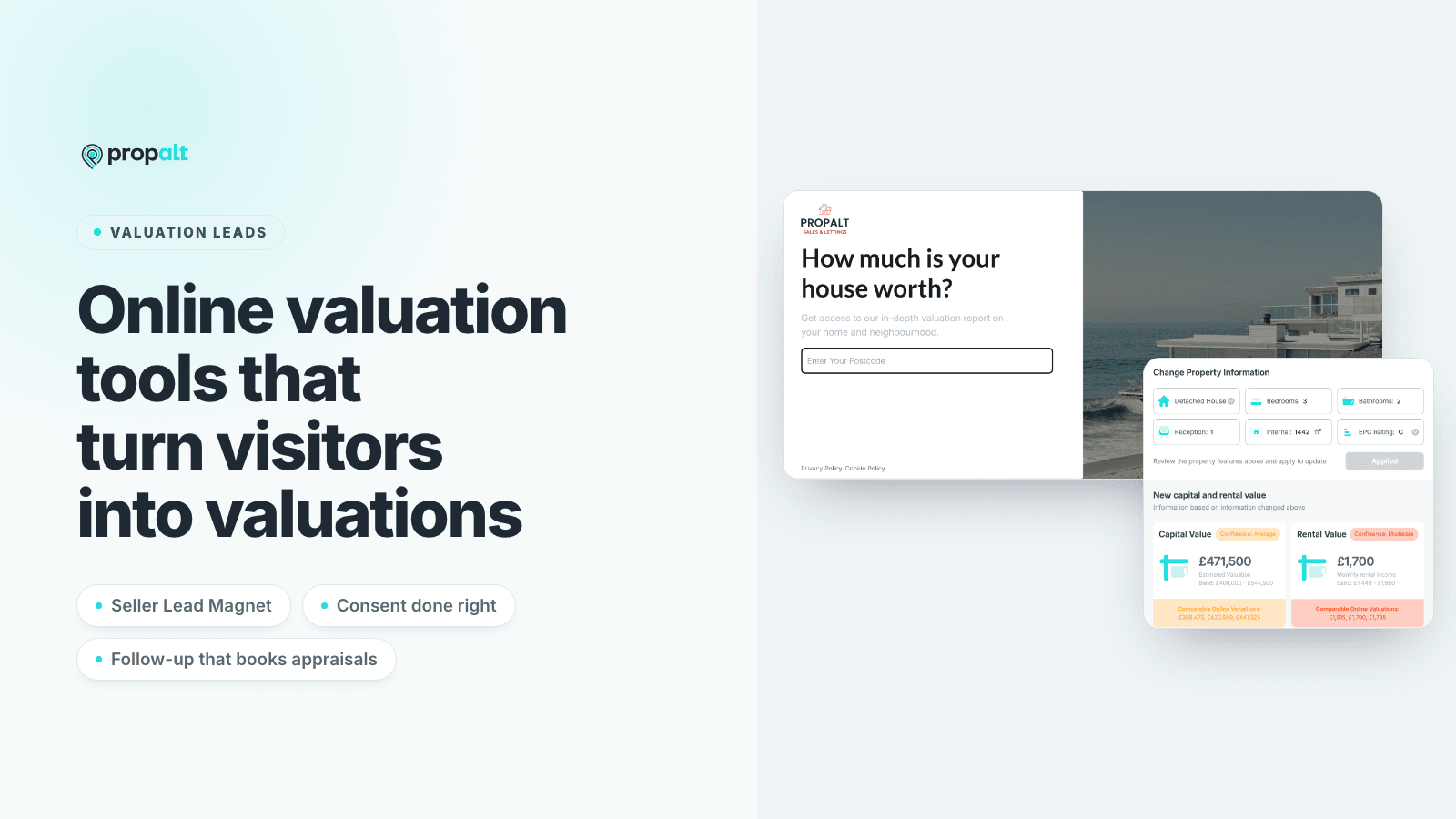
An instant valuation tool on your website does one job. It turns an anonymous visitor who is thinking about selling into a named homeowner who has given you their address. The price range, the branding and the report all exist to make that exchange feel worth it to the person filling in the form.
That exchange is also where the risk sits. The figure on screen is an automated estimate, not a market appraisal. The contact details arrive with obligations under UK GDPR and the Privacy and Electronic Communications Regulations (PECR) from the moment the form is submitted.
This guide is for agents choosing an online valuation tool for their own website. Which one should you pick, what should the form say, and what should happen in the first week after someone uses it?
It works as a value exchange: the homeowner gets an estimated price range, and you get their address, property details and contact information. The visitor enters a postcode, picks their address, confirms the property type and bedrooms, then gives a name, email and usually a phone number before the estimate appears.
Three things make these leads different from portal enquiries.
Keep the form short. Every extra mandatory field costs completions, so ask for what you need to book an appraisal and nothing more.
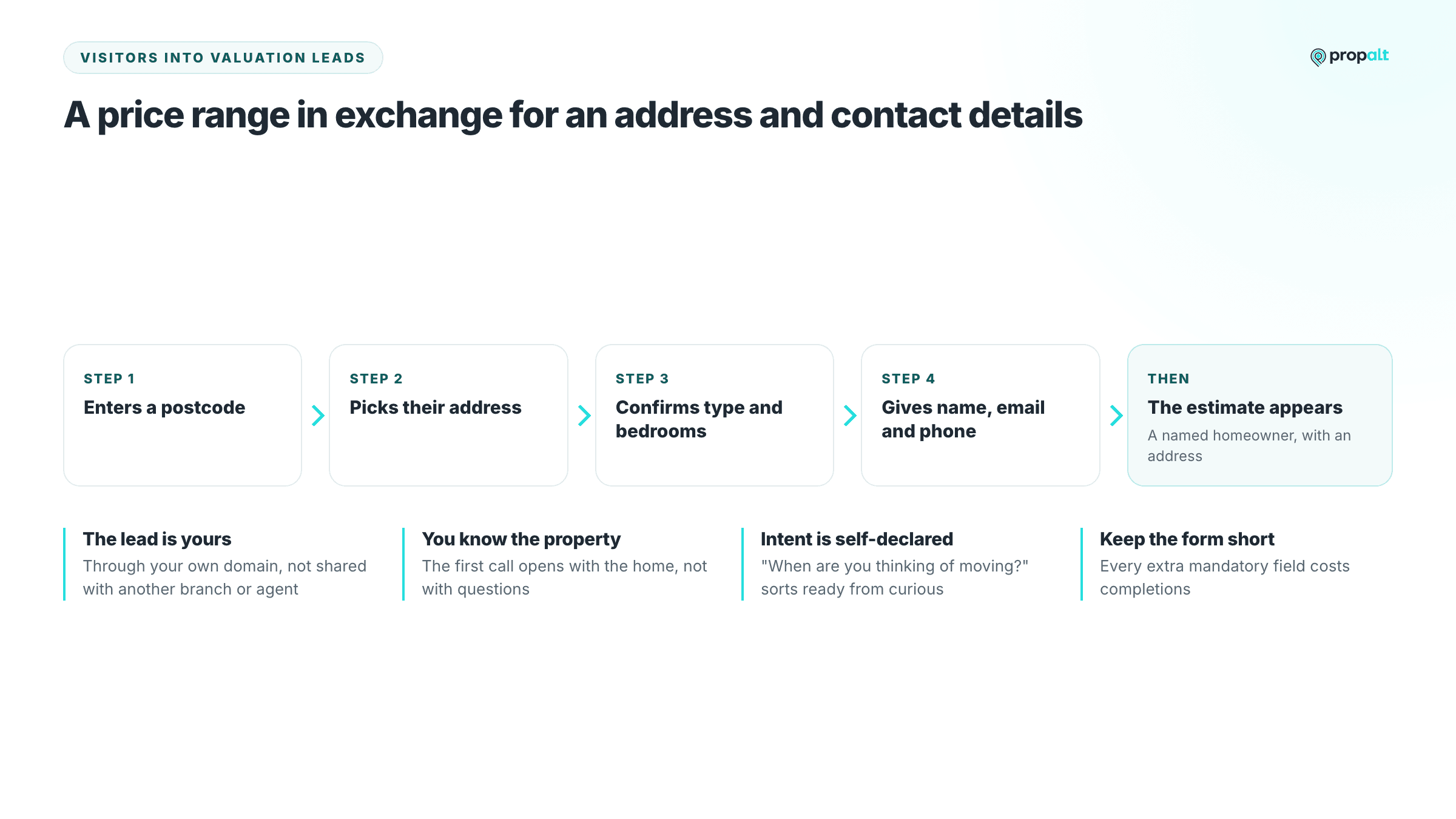
The estimate gets the visitor to the form. The follow-up decides whether you ever see the house.
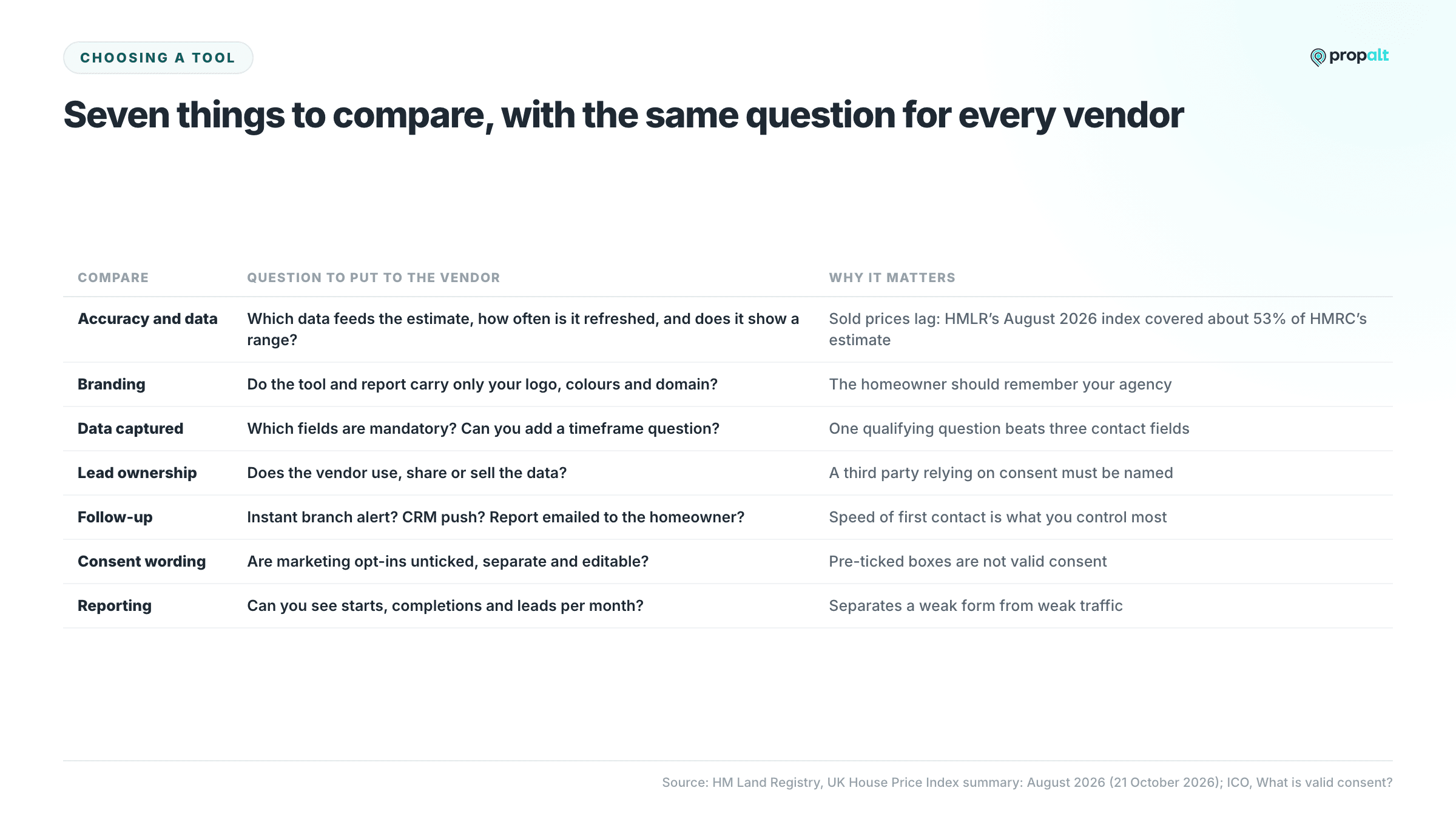
Compare seven things, and ask every vendor the same questions so the answers line up. The table below is built to be printed and taken into a demo.
| What to compare | Question to put to the vendor | Why it matters |
|---|---|---|
| Accuracy and data | Which sold, listing and property data feeds the estimate, and how often is it refreshed? Does it show a range and the evidence behind it? | Sold price records arrive with a lag. HM Land Registry's own August 2026 index was based on records covering about 53% of HMRC's provisional transaction estimate for that month, so the newest sales are always incomplete. |
| Branding | Does the tool and the report carry only your logo, colours and domain? | The homeowner should remember your agency, not the software. |
| Data captured | Which fields are mandatory? Can you add a timeframe or reason-for-moving question? | Short forms complete more often. One qualifying question is worth more than three contact fields. |
| Lead ownership | Does the vendor use the data for its own marketing, share it, or sell it? | If a third party relies on the homeowner's consent, the ICO says that party must be named in the consent request. |
| Follow-up | Does a lead alert reach the branch instantly? Does it push to your CRM? Does the homeowner get the report by email? | Speed of first contact is the step you control most. |
| Consent wording | Are marketing opt-ins unticked, separate and editable by you? | Pre-ticked boxes are not valid consent under UK GDPR. |
| Reporting | Can you see starts, completions and leads per month? | Without a completion rate you cannot tell a weak form from weak traffic. |
Treat any claim of a single "accurate" figure with care. No automated model sees condition, recent works or the garden. A vendor who explains how its range is built is more useful than one who quotes an accuracy percentage without a method.
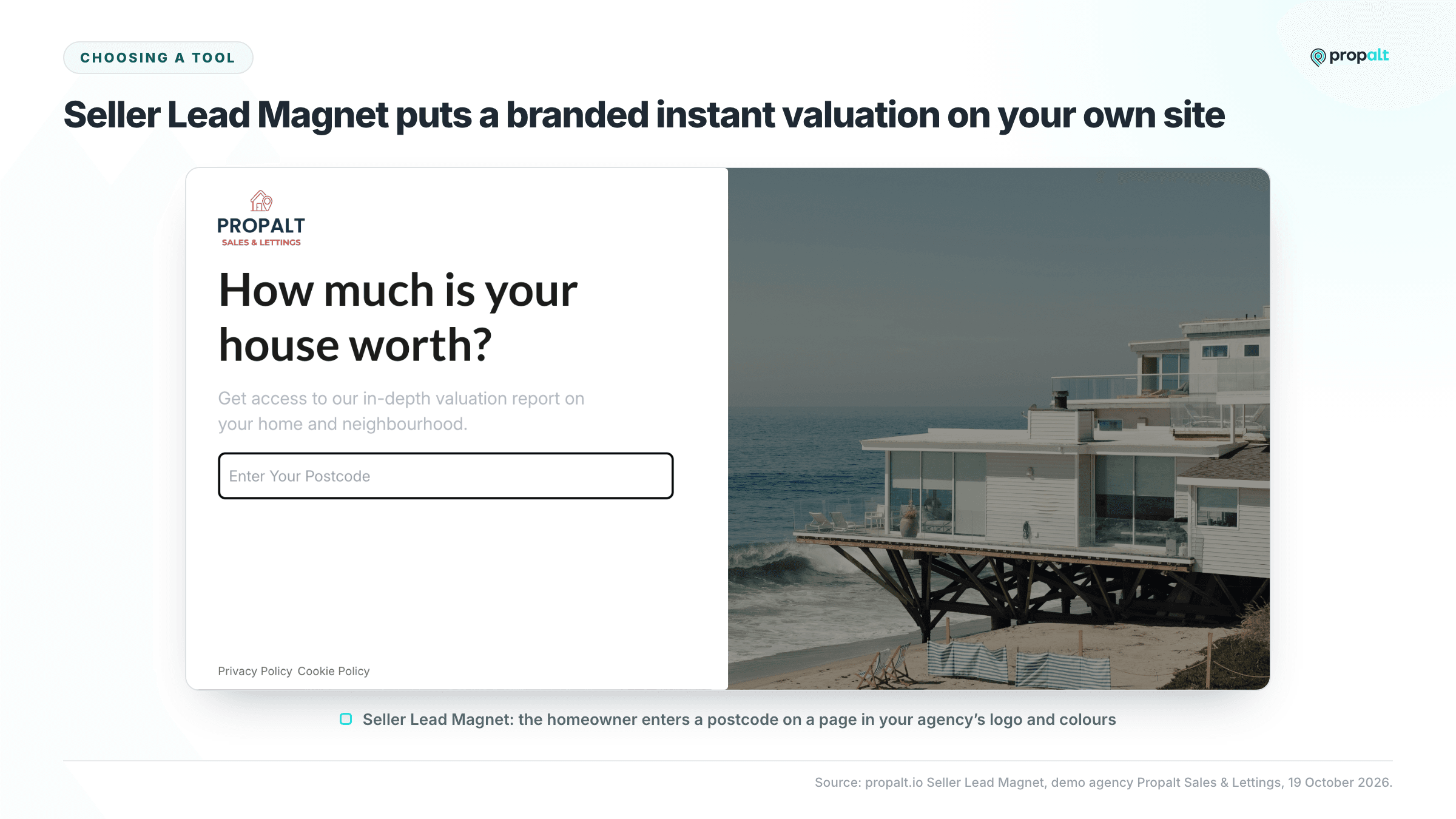
In Propalt, Seller Lead Magnet puts a branded instant valuation on your own website, with nearby property insights shown next to the estimate, so the homeowner sees your agency throughout.
You need a lawful basis for each purpose, and PECR adds rules for marketing by email, text and phone. Providing the estimate the homeowner asked for, and contacting them about it, is one purpose. Adding them to your marketing list is another. Treat them separately on the form.
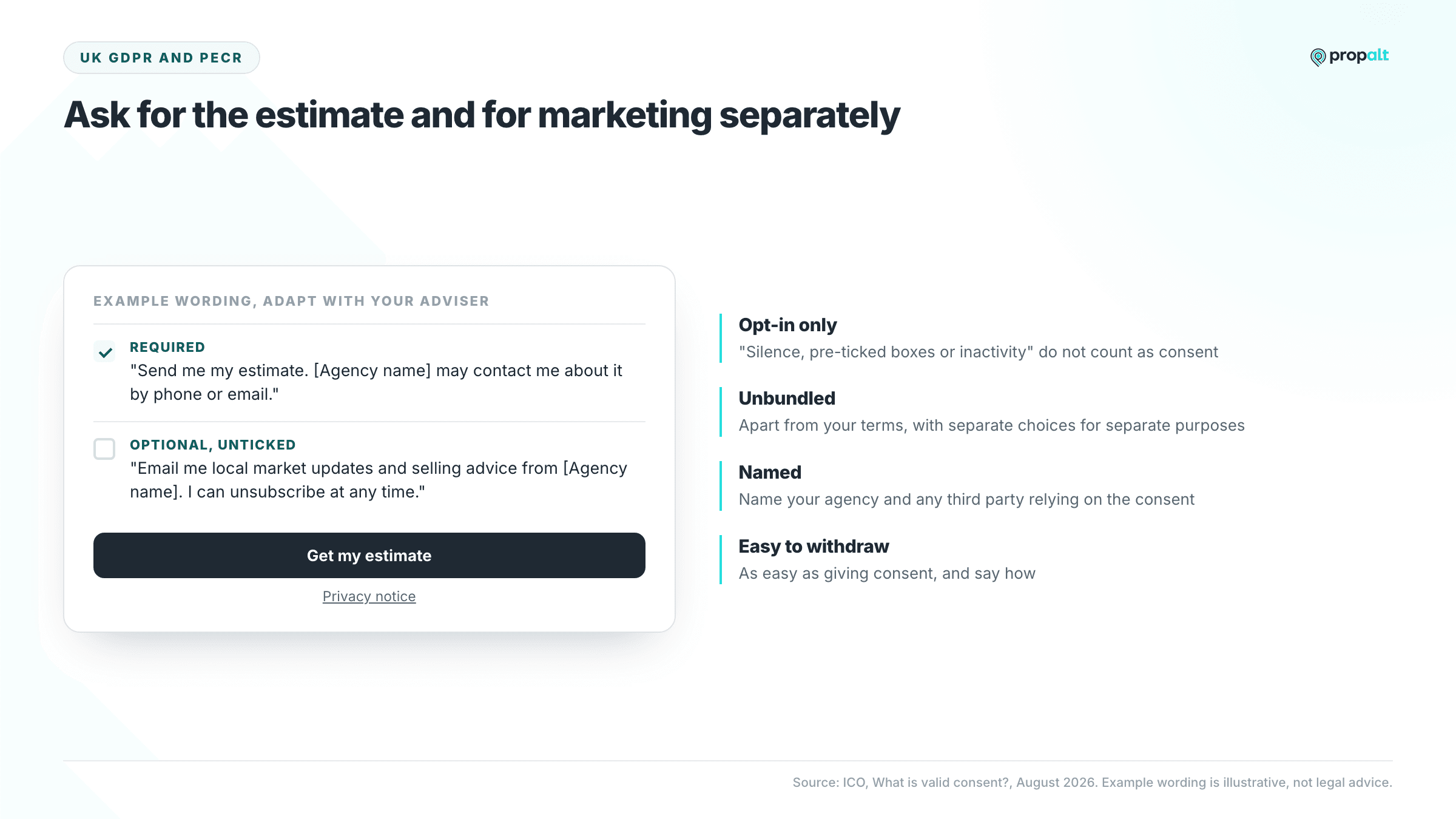
The ICO's guidance on valid consent (August 2026) sets the standard for any marketing opt-in:
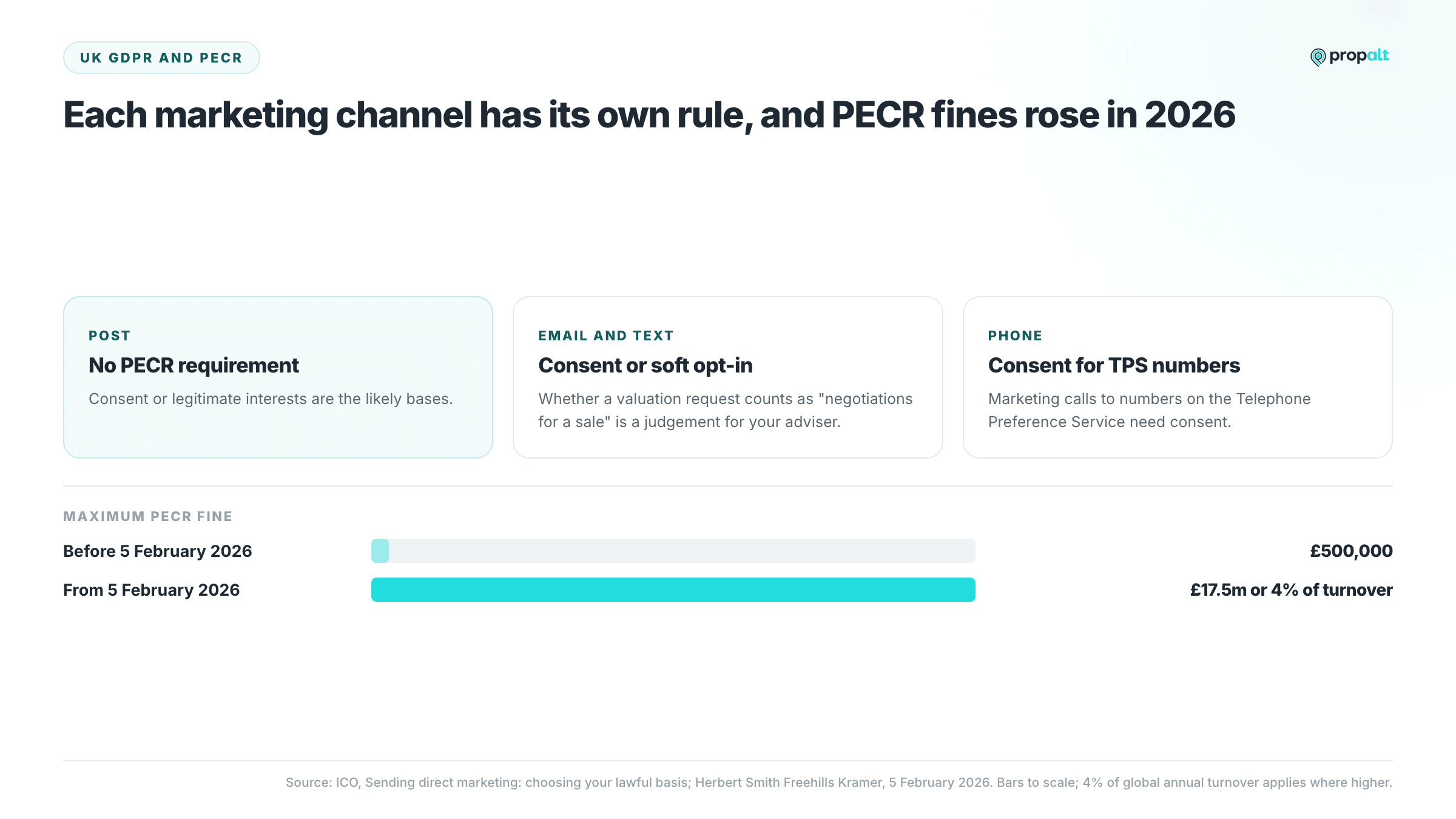
For channels, the ICO says postal marketing has no PECR requirement, so consent or legitimate interests are the likely bases. Marketing emails and texts to individuals need consent or the soft opt-in. Marketing calls to numbers on the Telephone Preference Service need consent. Whether a free valuation request counts as "negotiations for a sale" under the soft opt-in is a judgement to take with your data protection adviser; do not assume it.
The cost of getting this wrong rose this year. The Data (Use and Access) Act 2025 changes that commenced on 5 February 2026 raised the maximum PECR fine from £500,000 to the higher of £17.5 million or 4% of global annual turnover.
An example of separated wording (adapt it with your own adviser):
Required: "Send me my estimate. [Agency name] may contact me about it by phone or email."
Optional, unticked: "Email me local market updates and selling advice from [Agency name]. I can unsubscribe at any time."
Link your privacy notice directly under the submit button.
Say so on the results screen, in the report and in the first call. An instant estimate is not a RICS valuation, a mortgage valuation or a market appraisal, and presenting it as one creates two problems.
The first is commercial. A homeowner who anchors on a high automated figure is harder to price correctly when you visit. The second is legal. Since 6 April 2025, unfair commercial practices rules sit in the Digital Markets, Competition and Consumers Act 2024, which replaced the Consumer Protection from Unfair Trading Regulations 2008. Misleading actions and misleading omissions are still prohibited, and the Property Redress Scheme notes that the CMA can now impose penalties of up to 10% of worldwide turnover directly.
Four habits keep the estimate honest:
Local figures move month to month, which is why the date matters. In Coventry's CV5 postcode district, the median price of homes on the market was £295,000 in August 2026 and £260,000 in September 2026, and homes took 76 days to reach sale agreed in September, against 66 days nationally. That median shifts with the mix of homes listed as well as with prices, so a range dated to the month gives the homeowner a fairer picture than a single figure.
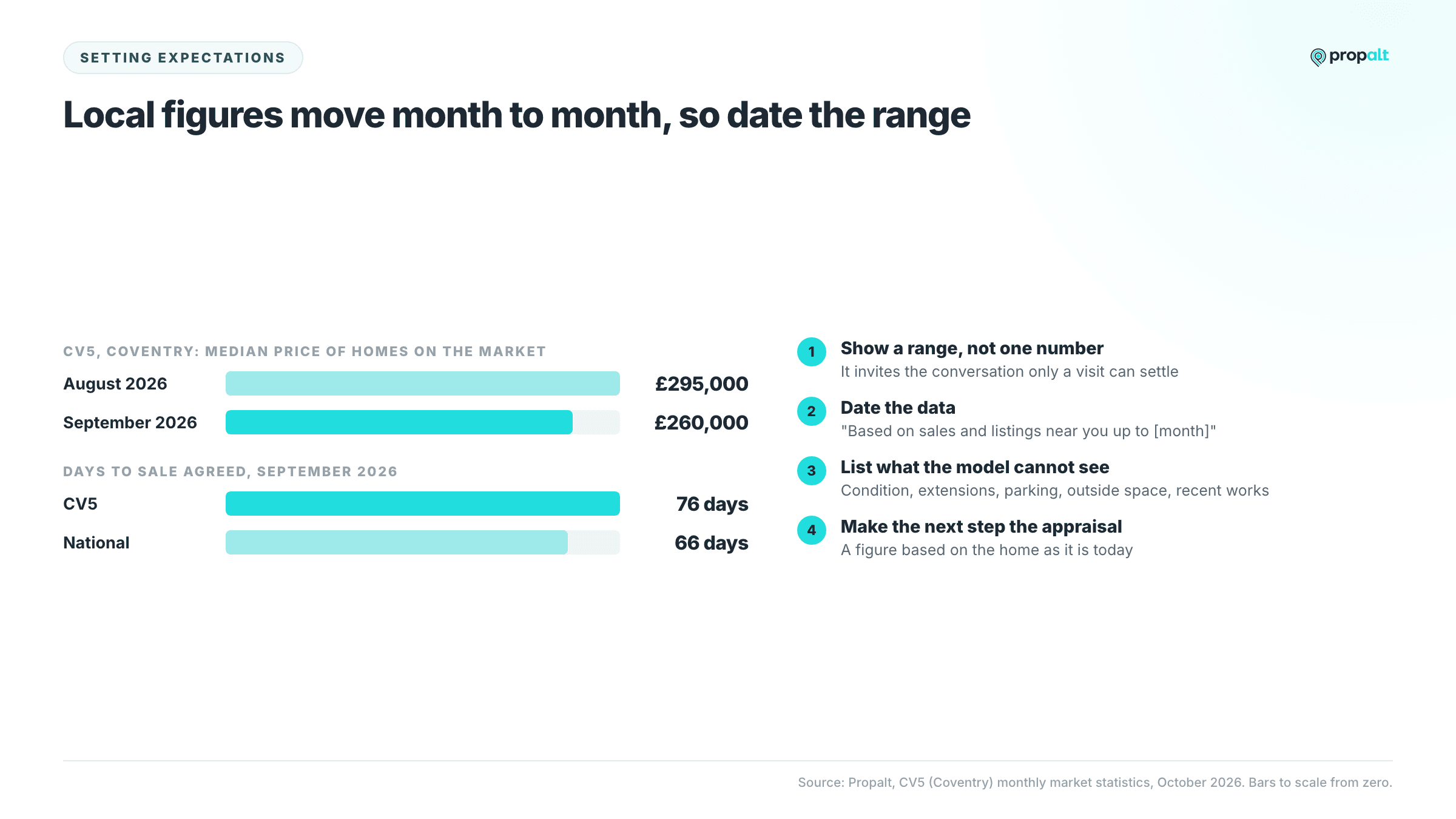
A range invites the conversation. A single number ends it.
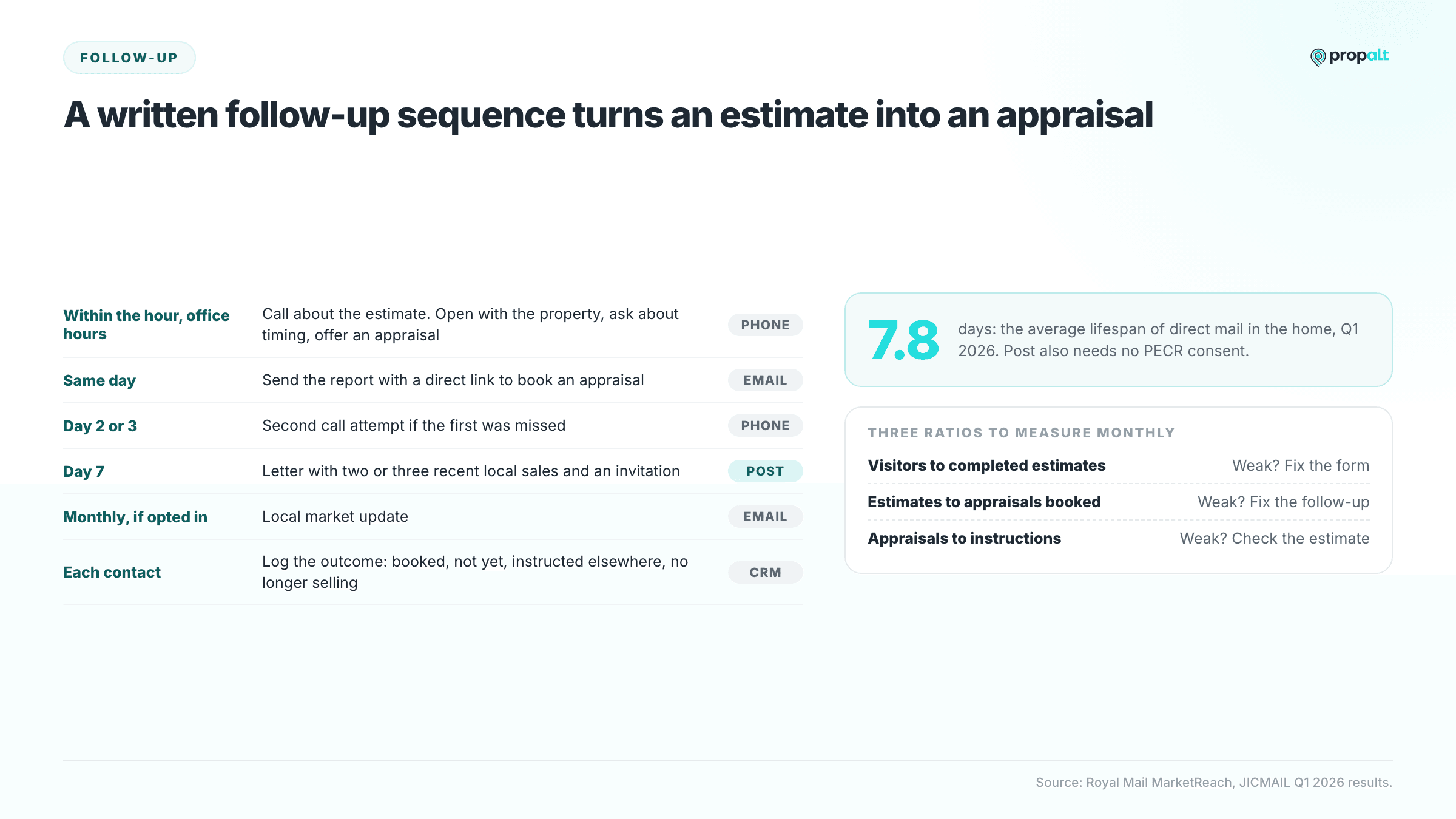
A written sequence, owned by a named person in each branch, with every outcome logged. The tool produces valuation leads; the process produces appraisals. Here is a sequence to adapt:
| When | Action | Channel |
|---|---|---|
| Within the hour (office hours) | Call about the estimate they requested. Open with the property, ask about timing, offer an appraisal. | Phone |
| Same day | Send the report with a direct link to book an appraisal. | |
| Day 2 or 3 | Second call attempt if the first was missed. | Phone |
| Day 7 | Letter with two or three recent local sales and an appraisal invitation. | Post |
| Monthly, if they opted in | Local market update. | |
| Each contact | Log the outcome: booked, not yet, instructed elsewhere, no longer selling. | CRM |
Post sits in the sequence for a reason. It reaches the homeowner without PECR consent, and it lasts: JICMAIL measured an average lifespan of 7.8 days in the home for direct mail in Q1 2026. A letter also puts a printed version of your evidence on the kitchen table. Our guide to writing a prospecting letter covers what that letter should say, and the rule of seven explains why one call is rarely enough.
Measure three ratios each month: visitors to completed estimates, estimates to appraisals booked, and appraisals to instructions. If the first is weak, fix the form. If the second is weak, fix the follow-up. If the third is weak, the estimate may be setting the wrong expectation.
For the wider picture of where website valuations fit among your other sources of instructions, see our estate agent lead generation guide.
📌 KEY TAKEAWAY
An online valuation tool for estate agents earns its place only when three things are right: the form captures what you need and asks for marketing consent separately, the results present a dated range as an estimate, and a named person follows up within the hour. Compare tools on data, branding, lead ownership, follow-up and consent wording before price. Propalt's Seller Lead Magnet is a branded instant valuation for your own website with nearby property information for sellers.
SOURCES & DATA REFERENCES
Contains HM Land Registry data © Crown copyright and database right 2026. This data is licensed under the Open Government Licence v3.0.
Dormant Marketing Strategy ...If you’re attending a valuation with one of these sellers, there’s a risk: you leave without an instruction, only a vague promise of “we’ll be in touch once we’ve found something.” Even if they’re sincere, you’re now in a follow-up loop. And meanwhile, another agent could win their trust, find their next home, and take the listing.

During the summer, some listings stall. Some agents go on holiday. And some vendors get fed up. That’s where you come in. Here are six practical tips for improving your on-market canvassing strategy.

Discover the latest on UK mortgage approvals and house price trends in our article, providing essential insights for homebuyers, sellers, and market enthusiasts.